 Pat Taub
One of the things I like about getting older is discovering I am still capable of surprising myself.
I am not the woman I was at thirty, or fifty, or even seventy. I have different strengths now. I have accumulated experience, perspective, mistakes, friendships, memories—and, thankfully, wisdom. What I don’t want to accumulate is the assumption that because I am older, my usefulness has expired.
There is a growing recognition older women are not simply people who need to be cared for. We are artists, writers, bloggers, activists, workers, organizers, mothers, grandmothers, volunteers, mentors to young people, participants in political movements, speaking out about issues that matter to us.
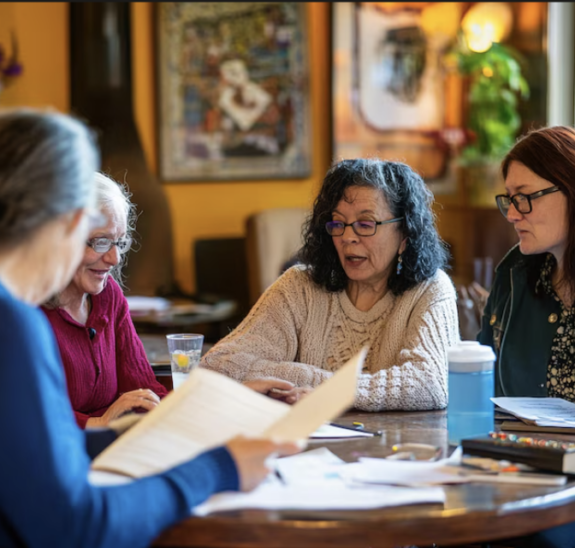
An older women’s writing group
And yet, we still encounter an odd contradiction. Society celebrates longevity while often treating the people who have achieved it as though they have somehow stepped outside the mainstream of life.
I see this particularly in medicine. An older woman can walk into a doctor’s office with a lifetime of knowledge about her own body and still find herself being told that a new pain, fatigue or physical limitation is simply “part of aging.” The problem isn’t that doctors recognize aging; it is that sometimes aging becomes the explanation instead of the beginning of an investigation. The United Nations has specifically identified the intersection of ageism and sexism as a serious form of discrimination against older women.
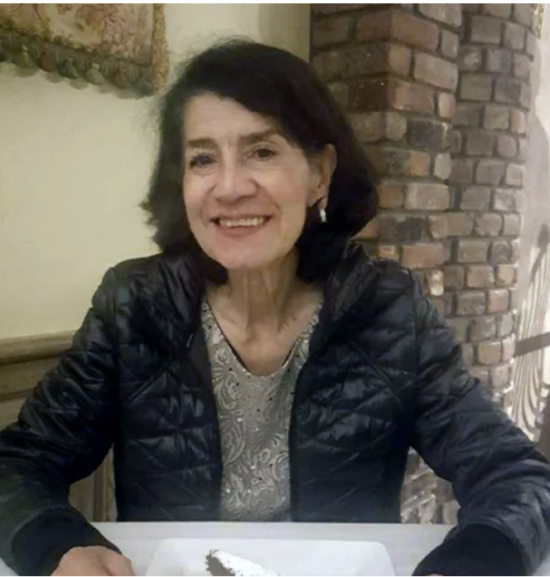
Nabia Esobar, 75, whose attorney daughter intervened when her mother was being overmedicated
There is a darker side to the story that we cannot ignore. Older women experience physical, psychological, sexual and financial abuse, often in relationships where they should feel safe. The World Health Organization estimates that about one in six people over 60 experiences abuse each year in community settings. And WHO has warned that older women remain badly underrepresented in research on violence against women, making their experiences harder to see and address.
I don’t want violence and discrimination to become the defining story of our later years.
Another story is being written—and older women are writing it themselves.
Across the world, women are organizing around the conviction that aging should not mean disappearing. Organizations such as Older Women’s Network Europe and other aging-rights groups have spent years demanding that older women be recognized as individuals with rights, opinions and political power. The recent movement toward a United Nations treaty on the rights of older people is another sign that aging is increasingly being understood as a matter of human rights, not charity.
I find that hopeful.
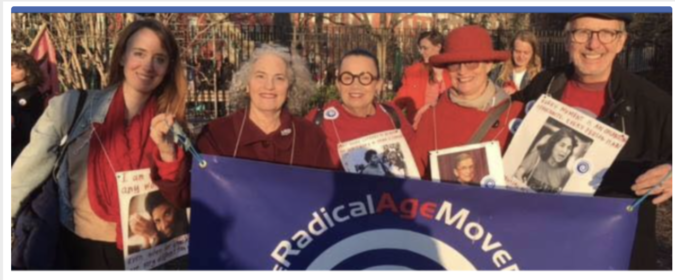
The Radical Age Movement founded to take on ageism and sexism
Perhaps this is our next great liberation movement: not fighting to become younger but insisting that older women be allowed to become fully visible as the women we actually are.
I want to be asked what I think. I want my experience to count. I want younger women to see aging not as a sentence but as another stage of possibility.

We have spent decades fighting to make room for ourselves.
Why would we stop now?
We are older.
We are different.
But we are not finished.
And perhaps the most exciting thing about this stage of life is realizing that we don’t have to wait for anyone to give us permission to begin again.

Two older women living full lives
