 Pat Taub
“American Doctor” and “NAZA,” new documentaries about Palestine, highlight the extremes of humanity.
“American Doctor,” the first, showcases the best of humanity, exemplified through three American doctors with a history of volunteering in Gaza’s hospitals. We find Mark Perlmutter and Feroze Sidhwa, in chaotic, partially bombed-out hospitals where injured bodies arrive nonstop in facilities without essentials, like oxygen and antibiotics, forcing the doctors to make agonizing decisions about whom they can save.

Image from “American Doctor,” with Dr. Sidhwa, in the middle, operating
The third doctor, Thaer Ahmad, is repeatedly denied entry given his Palestinian background–although he had prior volunteer medical stints in Gaza. In response Ahmad dedicates himself to advocating for Palestine, arranging speaking forums and delegations to Congress to drum up support for Gaza.
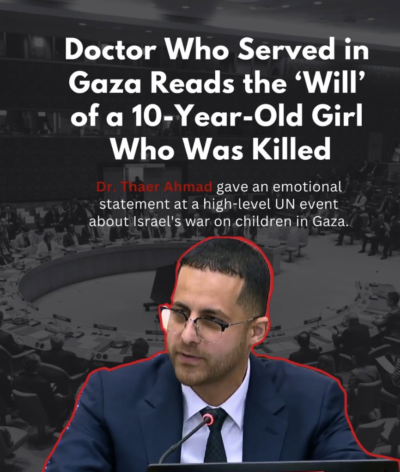
Dr, Ahmad delivering a speech before the UN
In-between surgeries, Perlmutter and Sidhwa express their anger at American compliance in Israel’s nonstop bombing of Gaza. At one point, Sidhwa is on his phone, describing how the top floor of his hospital in Kuan Younis was just bombed, “I was just on that floor; if I hadn’t left when I did, I would have been killed.”
The second part of the film depicts Perlmutter and Sidhwa back in the US, advocating for Palestine, describing for TV audiences and Congressional representatives the severity of life in Gaza.
TV anchors, interviewing them, argue Hamas is responsible for Gaza’s carnage. Sidhwa challenges this narrative, but the interviewer dismisses Sidhwa’s accounts.
While Sidhwa remains composed in his media appearances, Perlmutter can’t contain his anger when his descriptions of Israel’s deliberate targeting of Gaza’s children fail to register.
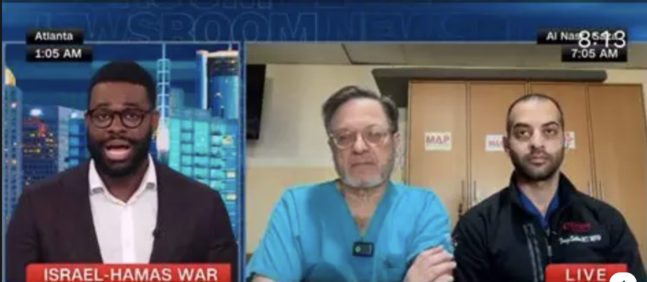
Perlmutter and Sidhwa being interviewed re: their experience in Gaza
Leaving Gaza, exchanging fond farewells with medical staff, both doctors agonize over abandoning Gaza’s wounded and returning to their comfortable lives, but the trauma of what they experienced is inescapable.
Back in North Carolina Perlmutter’s partner tries to comfort him to assuage his guilt over leaving Gaza. In response he emits a soft-spoken, “Thanks,” while gazing into the distance, conveying his aloneness, suggesting the depths of his suffering can’t be understood.
From his bachelor apartment in California, Sidhwa repeatedly agonizes, “ I never should have left Gaza.”
The second half of the film depicts Ahmad in his Chicago Palestinian community, holding public rallies in support of Gaza and arranging speaking engagements with Perlmutter and Sidhwa. Their meetings with Congressional representatives, pleading their case for Palestine, ending Congressional monies for Israel’s army inevitably are fruitless.
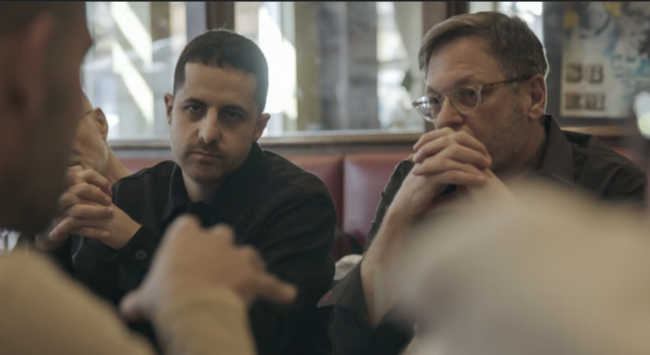
Drs. Ahmad and Perlmutter discussing strategies for their Congressional mission
The film challenges us: do we turn away from the escalating horrors inflicted on Palestine, or do we allow what we witness to change us, to speak out?
The second documentary,” “NAZA,” graphically depicts the worst of humanity. In chilling interviews with Israeli soldiers, they recount how, over the past three years, they systemically and unfeelingly went about wiping Gaza off the map.

Israeli soldiers in “Naza” sharing their experiences from a nocturnal Israeli rooftop to ensure their anonymity
Much of the killing was done by algorithm through Israel’s AI systems, cited by critics as an example of how Gaza has become a testing ground for Israel’s advanced killing machines: approaches Israel is marketing to other nations. One solider described operating AI systems as “insanely fun.”Another soldier, responsible for mass killings, bragged about serving in Israel’s most prestigious intelligence unit.
The vast majority of the 24 Israeli soldiers interviewed in “NAZA” defended their murder of tens of thousands of Gaza’s children as “just following orders.” (Where have we heard this before?)
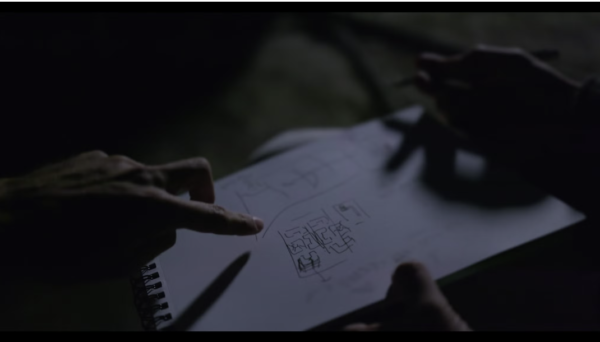
A participant sketches apartment blocks in Gaza, describing how Gazans were killed.
