 Pat Taub
Like many women I’ve spent endless hours analyzing my relationship with my mother, giving only a passing nod to my father-daughter relationship, which impacted my independent strivings and my relationships with men. As Father’s Day approaches, it’s an opportune time to reflect on my relationship with my father.
I grew up in the 1950’s when gender roles were strictly defined. My mother, like most women of the era, stayed at home, focused on creating a model home and model children. Like Don Draper in “Mad Men,” my father spent long hours at the office, seeing his children at the dinner table and weekends, when he wasn’t catching up on work or playing tennis.
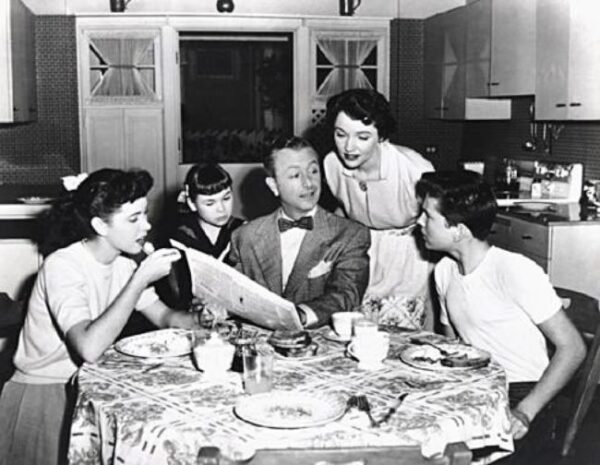
The popular ’50’s TV show, “Father Knows Best,” perpetuated the image of a family ruled by the father.
My father’s explosive nature dominated our family. We learned to tread carefully, measuring our speech least we set him off. It didn’t take much, like the time my mother ran out of chili sauce for his meatloaf. Fuming, my father bolted from the dining room table, slamming doors in his path.
His temper surface in other ways besides his verbal abusive of our mother. When he lost a game of table tennis with one of my brothers, he’d hurl his paddle across the room. To my great fortune he had a soft spot for his only daughter.
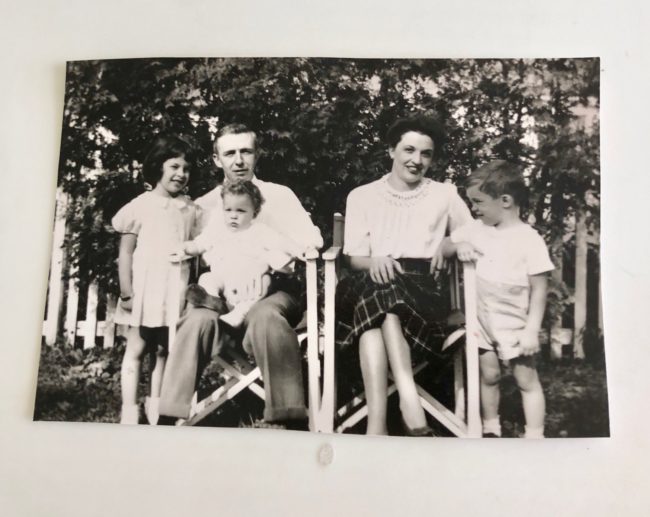
A childhood family photo: yours truly, age 5, baby brother Ted, 6 months and brother Curry, 3.
I spent summer vacations with my nose in a book. Observing my love of books, my father frequently passed along novels. I remember reading “The Tin Drum,” not fully comprehending it, yet not daring to admit this.
During my middle school years my father dispensed advice when I became an editor of the school paper or when I was preparing a speech. But he fell short when I performed in school plays, always too busy at work to attend my performances. I learned to be grateful for what fathering was doled out.
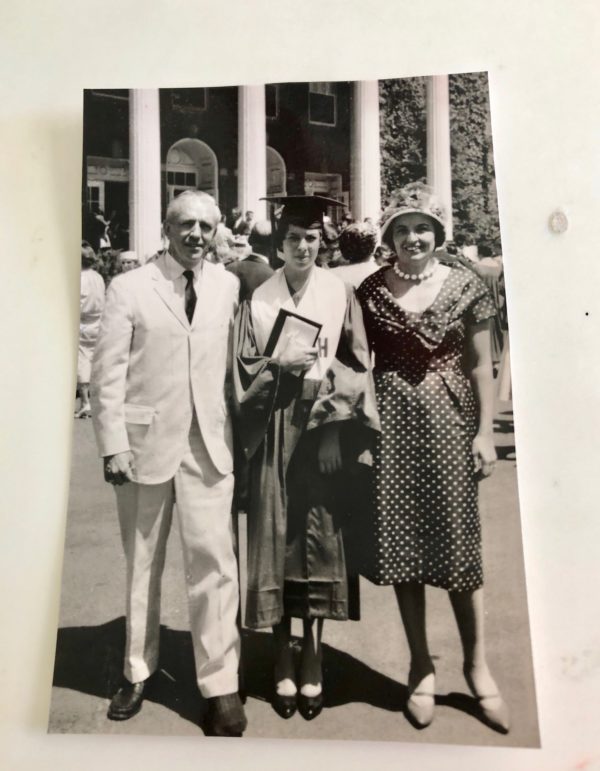
My boarding school graduation flanked by my parents.
As I grew older, I defended my mother against my father’s demeaning comments. Whenever she made an intelligent comment, my father mocked her, “Jane, you’re not as dumb as you look.” On these occasions, I jumped to my mother’s defense. In turn, my father sarcastically replied, “I was only joking.”
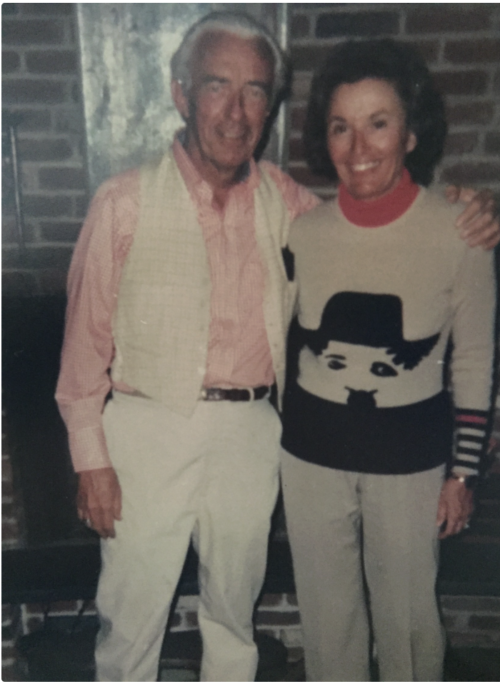
My parents, c. their late 50’s, a handsome couple who projected a positive image
To his credit my father rewarded my adventuresome spirit. During my sophomore year of college, I campaigned to spend the summer in Europe. He relented on the condition that it be an educational experience. I tracked down an international student work camp in Chambon, France, where we dug ditches for a basketball court. After I returned energized, my father offered to send me overseas the next year with the same stipulation: an educational focus. I joined a group of Oberlin students, attending a student East-West Peace seminar in Warsaw.
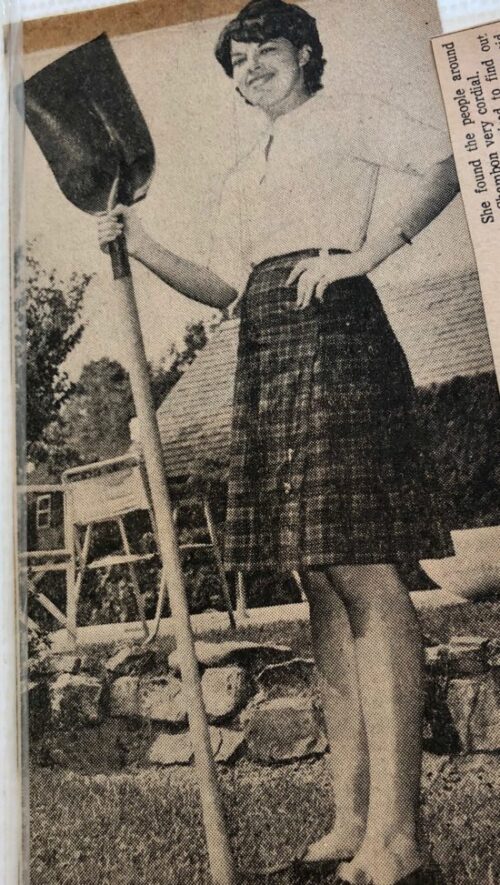
A local newspaper article featuring my summer in France digging ditches, age 19
When I married right out of college my father assumed my future would consist of raising a family. I had other plans, like graduate school and a career. When I graduated from Catholic University’s Social Work School with a full scholarship, by way of a rare apology, my father confessed to misjudging me, accepting my idealistic desire to make a difference in the world.
My father lived by the dictum, “Persistence is the better part of change,” keeping his goal front and center, refusing to give up. Inspired by his example, I persisted (and succeeded) when I pitched a column to the Syracuse Newspapers and later to the Syracuse NPR station for a women’s radio show.
I can track my bad choices in men to my father’s model. I married a womanizer, which was my father’s pattern. I was in a long-term relationship with a man who was verbally abusive. I’m now in a healthy relationship with a kind, considerate partner.
It’s been hard to forgive my father for dominating our family with his violent temper, but I’ve come to understand how his own unhappy childhood affected him. I’m pleased to see new generations of young fathers move from the sidelines into an active parenting role with their daughters and sons.

Oldest son and children: he’s among the new breed of involved fathers
