 Pat Taub
Several years ago, I participated in a National Geographic “people to people” tour to Cuba.
Now that Trump’s oil embargo is threatening Cuba’s very survival, I’m sharing my memories of Cuba for those unacquainted with its amazing people.
Everywhere I went Cubans were open and warm, eager to share their impressions of daily life along with their strategies for overcoming the seven decades-long US imposed embargo. Cuba’s resilience draws comparisons to Gaza, but this new embargo has challenged Cuba like never before. Without oil to run their cars, factories, homes and hospitals the country faces mass starvation and deaths.
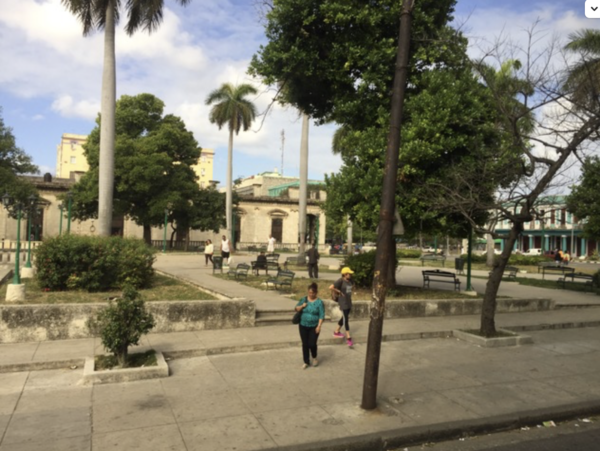
A city park in Havana
Credit for Cuba’s resilience must be given to a socialist government which stresses community over the individual. During the severe economic crisis of 1992, when trade with Russia came to a stand still overnight, Cubans supported one another, exchanging survival tips like frying banana peels, using battery fluid for hair dye, and teaching one another how to ride bicycles. During this period the average Cuban lost 20 pounds.
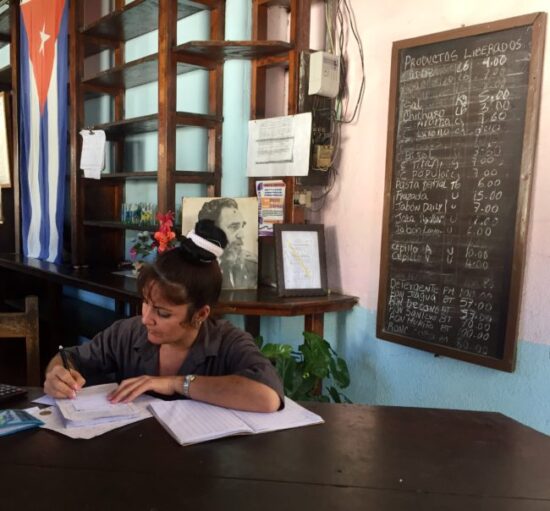
All Cubans receive food rations which are redeemed at ration stores like this one–note the bare shelves
Because very few residences of Havana can afford air conditioning, when their homes become unbearably hot, entire families seek refuge on the Malecon, an avenue along the seawall that stretches for five miles along Havana’s coast.
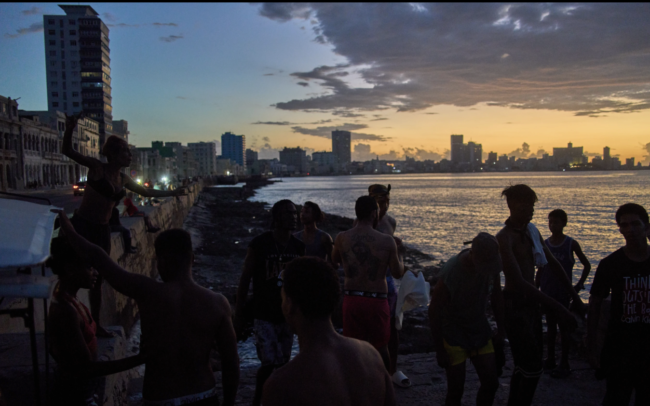
Cubans gathering at the Malecon during last week’s blackout
During my visit I was charmed by the hospitality industry. The staff at my modest hotel were consistently engaging and helpful. Mojitos were freely distributed to the point where one could get tipsy well before dinner. Family-owned restaurants, known as paladars, frequently meant dining in a family’s own humble dining room, where the limited menus—due to a food scarcity–were imaginatively prepared. Rice and beans were a restaurant mainstay.

Street musicians, whose music is reminiscent of The Buena Vista Social Club documentary
One evening another American woman and I attended the Cuban World Series. As the evening dragged on, we became bored and headed for the exit. Noticing our imminent departure, a guard approached us, concerned we were on our own. He quickly commandeered a bus driver to take us to our hotel. We were the only passengers in the bus, which ripped through side streets at brakeneck speed. Back at our hotel we realized the driver was in a hurry because he didn’t want to miss the game’s end. A touching example of Cuba’s generosity of spirit.
Cubans, seeking to augment their incomes, can obtain licenses for small enterprises, like selling tourist trinkets from their humble front porches. Other Cubans find ways to raise money without reporting it, like our tour’s bus driver who proudly showed me photos of his 500-pound pig, which he’ll sell for its pork meat.

Cuban school children at a country school
Dr. Marta Numez, Professor of Sociology at the University of Havana, explained that feminism has met with resistance given Cuba’s machismo culture. While a 1991 law mandated that every Cuban university include a women’s studies program, everyday Cuban life bears little evidence of female gains. Because most Cuban men refuse to practice birth control, typically women carry condoms in their purses, while men see it as unmanly to submit to a vasectomy.
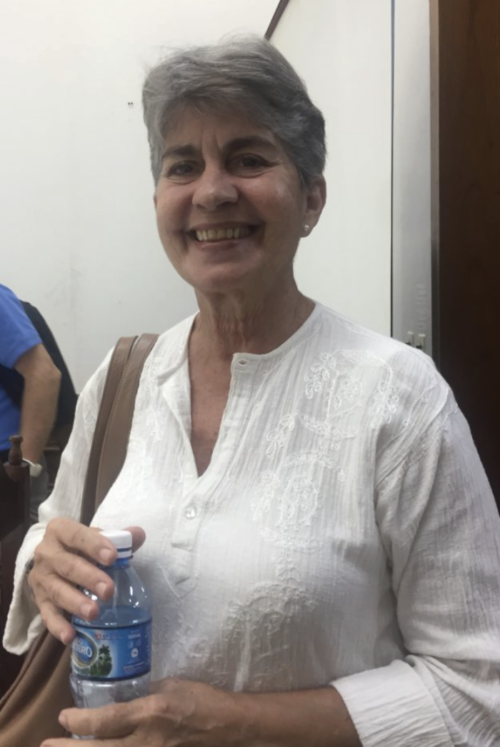
Dr. Marta Nunez, University of Havana, specializing in gender studies
On the plus side, elder Cuban women are valued. Art exhibits are replete with images of older women, celebrating their wisdom and naturally aging bodies. At a community party I watched a 92 year-old woman dancing up a storm.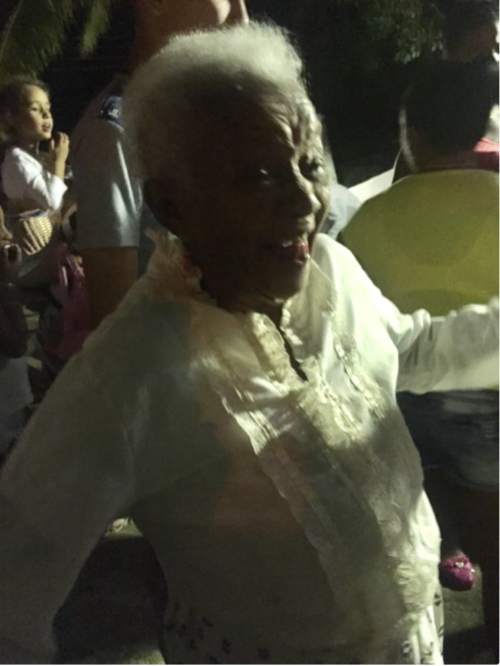
Women’s wisdom is celebrated in the Cuban Santeria religion where older women tell fortunes from reading cowrie shells.
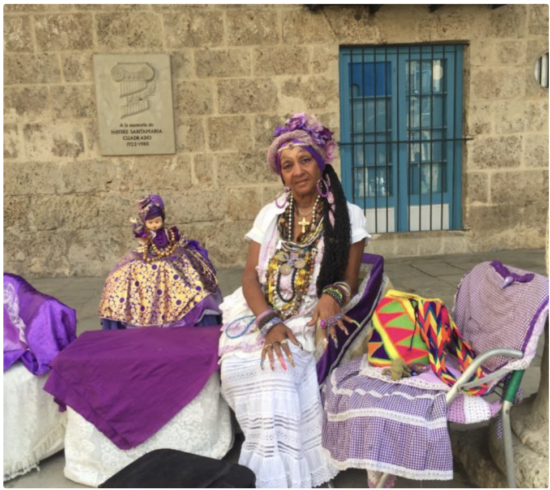
Santeri fortune teller at an Havana plaza
Cubans are proud of their high literacy rate and advanced health care. The arts are celebrated in Cuba. Cultural performances are very affordable for the average Cuban. I paid $30 to attend a modern dance performance while Cubans paid $3 for the same show.
Of all the foreign countries I’ve visited, few have touched me like Cuba. My prayers are with the international delegations bringing food and medical supplies to Cuba. All Cubans deserve lives of dignity, free of the long hand of the US empire.
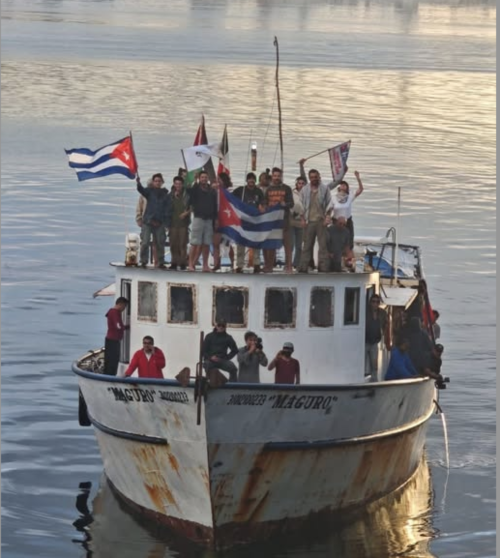
Gamma Flotilla arriving in Havana, March 24, 2026
