Pat Taub
In these perilous time, l often feel like I’m inhabiting the song, “Stop the World I Want to Get Off,” reeling from Iran’s debacle, the ongoing genocide in Gaza, the deepening climate crisis, ICE’s sway and more.
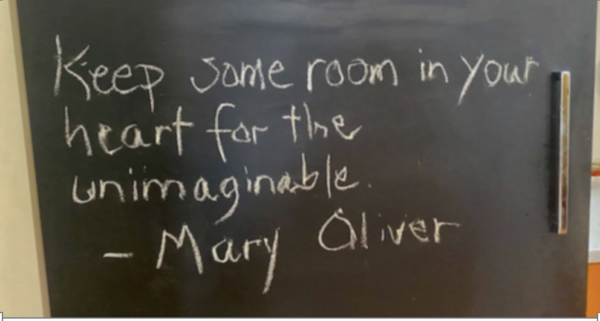
To soothe my spirits, a common practice I follow is to retrieve a Mary Olive poetry book from my library. Her poems are balm for my soul. As I’m drawn into her private world of majestic trees, the surf and friendly animals, I’m becalmed, motivated to hone my practice to see more, to love more.
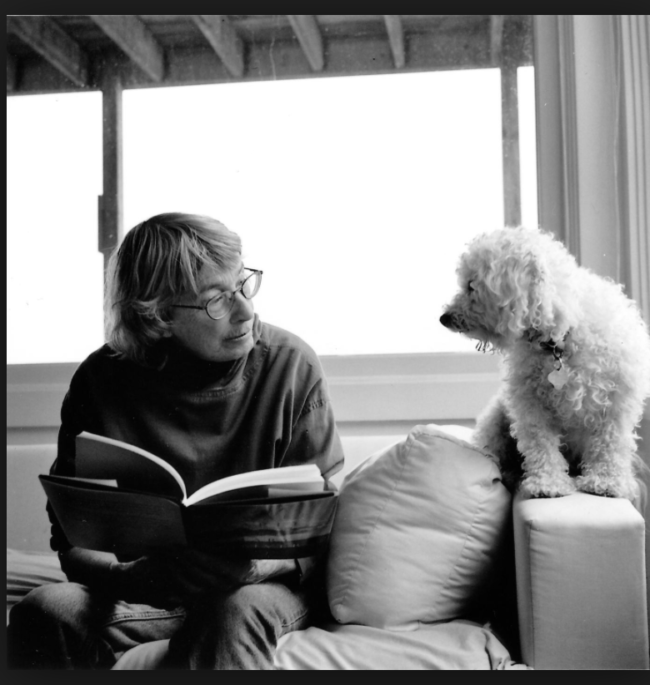
The late Mary Oliver reading with her beloved dog
Oliver’s popularity rests on poems that offer words to live by–words that stir our very being, like these verses from When Death Comes, tacked on the bulletin board by my desk:
When it’s over, I want to say: all my life
I was a bride married to amazement.
I was the bridegroom, taking the world into my arms.
When it is over, I don’t want to wonder
if I have made of my life something particular, and real.
I don’t want to find myself sighing and frightened,
or full of argument.
I don’t want to end up simply having visited this world.
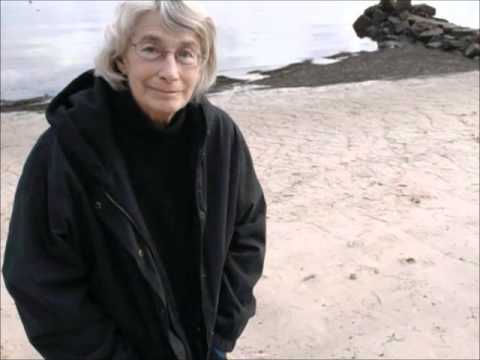
Mary Oliver in the moment on a beach walk
Oliver’s persistent subject matter is the natural world. Perhaps it’s her deep communion with nature that is responsible for her reverence for life. Oliver, who died in 2019, was an introvert who thrived on solitude. She was most at home in the woods or by the sea, quietly soaking in the lessons provided by the natural world.
When she walked the woods in Provincetown, Oliver developed the charming habit of leaving pencils in trees, so she could transcribe thoughts that surfaced during her ramblings.
Oliver frequently projected her animal observations onto human behavior, as in Wild Geese:
Meanwhile the wild geese, high in the clean blue air,
are heading home again.
Whoever you are, no matter how lonely,
the world offers itself to your imagination,
calls to you like the wild geese, harsh and exciting
over and over announcing your place
in the family of things.
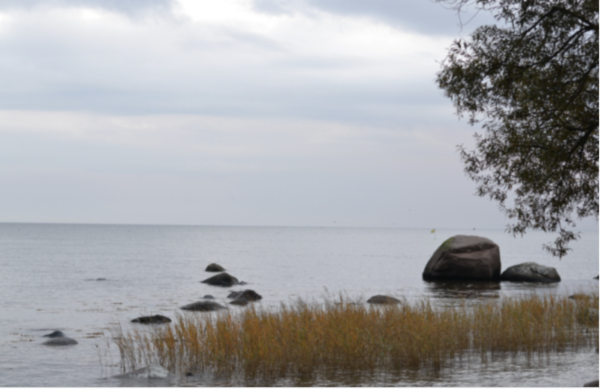
A tranquil image in nature, evocative of Oliver’s poetry
While Oliver had an inexhaustible supply of poems about nature, she didn’t ignore domestic life. Particularly compelling are her writings on loss and grief, penning poems about Molly Malone Cook, Oliver’s partner of 40 years, who died of cancer in 2005.
In A Pretty Song, Oliver pays tribute to Cook:
From the complications of loving, you
I think there is no end or return.
No answer, no coming out of it.
Which is the only way to love, isn’t it?
This isn’t a playground, this is
earth, our heaven, for a while.
Therefore, I have given precedence
to all my sudden, sullen, dark moods
that hold you in the center of my world.
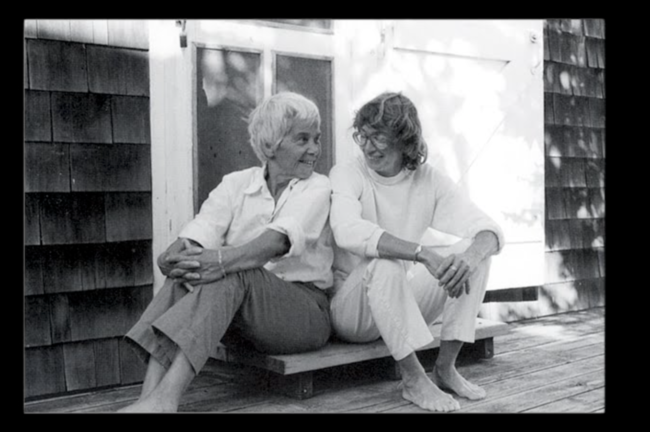
Molly Malone and Mary Oliver in Provincetown (No date)
Unlike major female poets of her generation, like Alice Walker and Marge Piercy, whose poems contain references to tackling the patriarchy, Oliver was apolitical, possibly to preserve her privacy. Writing without controversy kept her safe from unwanted queries from the press or public.
Oliver’s last book of poetry, Devotions, is a collection of earlier works, including The Gift, which offers a gentle, loving commentary on aging:
Be still, my soul, and steadfast.
Earth and heaven both are still watching
though time is draining from the clock
and your walk, that was confident and quick,
has become slow.
So, be slow if you must, but let
the heart still play its true part.
Love still as once you loved, deeply
and without patience. Let God and the world
know you are grateful.
That the gift has been given.