 Pat Taub
We have never had more ways to communicate, yet I wonder if we have forgotten how to have a conversation.
I have spent much of my life talking. As a journalist, radio host, teacher, and activist, I’m familiar with the power of words. I’ve learned how to ask questions, challenge authority, make an argument and, when necessary, raise my voice.
I also learned something else: a conversation is not just words. It is a person sitting across from you, looking at you, listening to what you say—and you listening back.

Conversations in real time are disappearing
That seems increasingly rare.
During my lifetime, the culture of conversation has changed profoundly. I remember when people sat together around a table or in a living room and talked for hours. We told stories. We argued. We sometimes interrupted each other. But we were physically present. We saw the expression on someone’s face, noticed when their voice changed, understood the silence between their words.
Now our conversations often take place through screens.
The internet has given us extraordinary access to one another, but it has also changed the meaning of intimacy. We text instead of calling. We email instead of talking. We comment instead of conversing. We can communicate with hundreds of people without actually being close to anyone.
Eye contact has become harder. I see people sitting together while each person looks down at a phone. We have become accustomed to looking at a screen rather than into another person’s eyes. We are losing something important in that exchange.
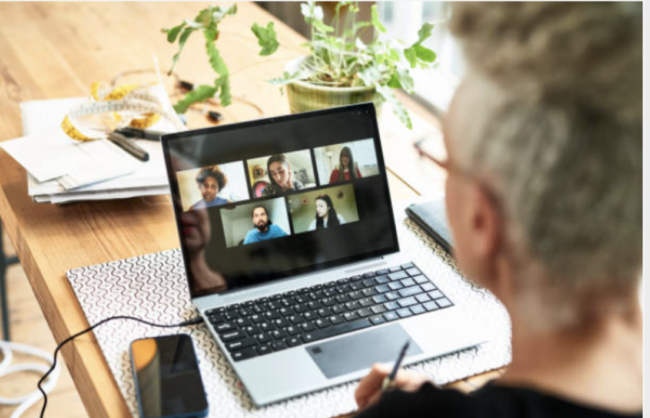
Zoom has made communication more complicated. It has allowed us to work, teach, organize and maintain relationships across great distances. During Covid it was invaluable. But there is something fundamentally different between seeing someone’s face on a screen and sitting beside them.
On Zoom, we see a head and shoulders in a little rectangle. We don’t feel the warmth of another body in the room. We don’t notice the small gestures that happen outside the frame. We don’t share the same physical space. The intimacy of being together has been replaced, in many situations, by the appearance of togetherness.
Technology has brought enormous benefits, but I worry about what happens when convenience replaces presence.
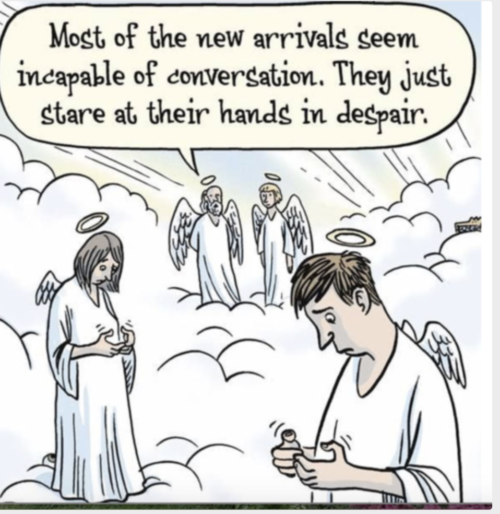
Our political conversations have suffered, too. We announce our opinions online rather than exploring them with another human being. We react before we understand. We divide people into those who agree with us and those who don’t. Listening has come to seem almost like weakness.
I have strong political convictions. After a lifetime of working for peace, feminism and justice, I am not going to pretend that every opinion is equally acceptable. I have learned that knowing what I believe does not mean I have nothing left to learn.
I want to look someone in the eyes again.
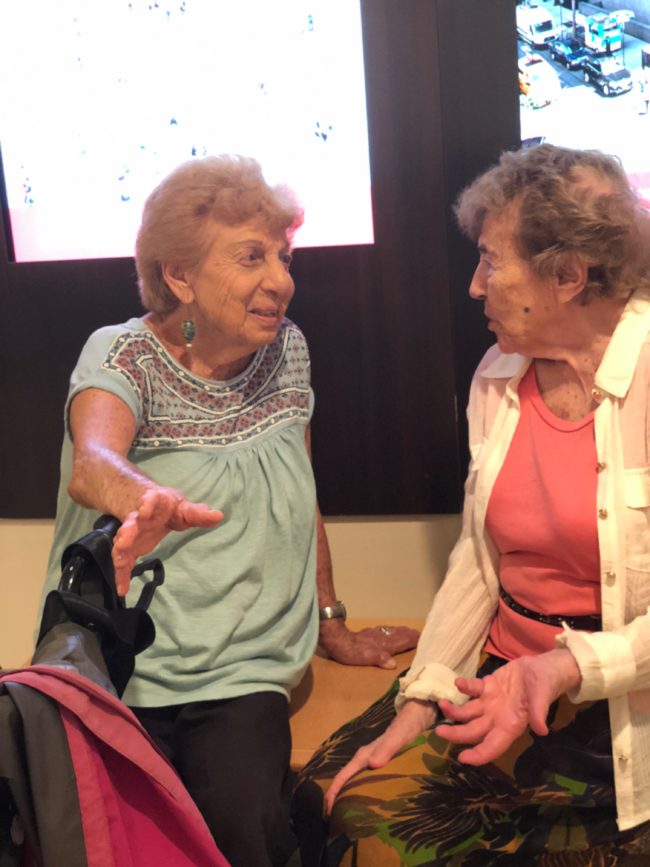
Bea and Randi, two old friends and activists who pride themselves on their history of in-person conversations
I want to sit across a table without a screen between us and listen long enough to discover the person beneath the opinion.
Perhaps that is the quiet resistance we need now—not more shouting, but more presence. More eye contact. More silence. More willingness to stay in a room with someone whose ideas challenge our own.
I am beginning to believe that deep listening may be one of the most powerful things I can offer.
