 Pat Taub
Sometimes the most unsettling aspect of a political policy is the language we use to describe it: “a cut,” “a reform”, “a change in eligibility” or, “a new vaccine schedule.”
Behind every one of those words is a child.
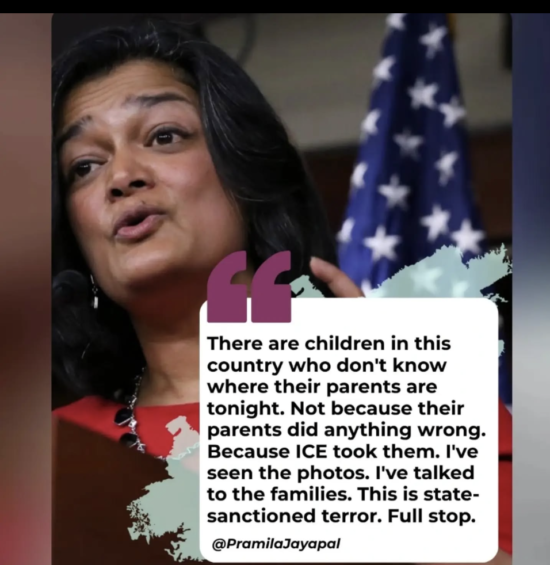
Consider the migrant child sitting in an immigration courtroom without a parent and, increasingly, without a lawyer. For a child, the difference between having an attorney and facing a judge alone can determine whether he or she is allowed to remain in the United States. More than 20,000 unaccompanied migrant children have been at risk of losing legal representation as federal contracts with legal-service organizations have been terminated or allowed to expire.
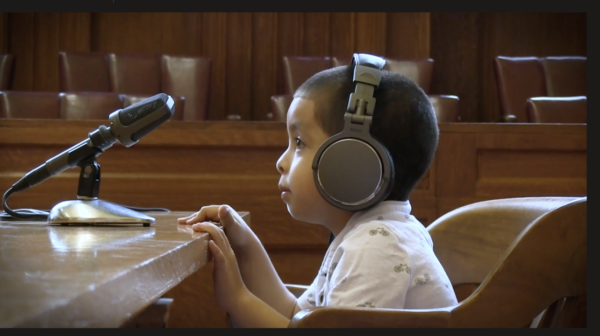
A migrant child defending himself in court
I keep imagining one of those children being asked questions by a judge.
Where did you come from?
Why did you leave?
Why should you be allowed to stay?
How can a frightened child possibly understand what is happening? Some children have already spent months in government custody.
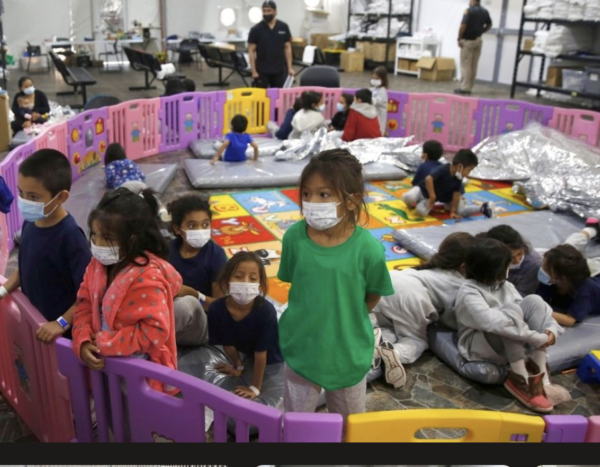
Migrant children in detention
This is what policy looks like when it enters a child’s life.
It looks like an empty seat at the dinner table.
It looks like a mother wondering whether her child will come home.
It looks like a preschool classroom with empty desks.
Head Start has been one of the great quiet achievements of American social policy, giving low-income children education, health screenings, nutrition and support before they enter elementary school. Now Trump is proposing to strip away many of the federal standards governing the program.
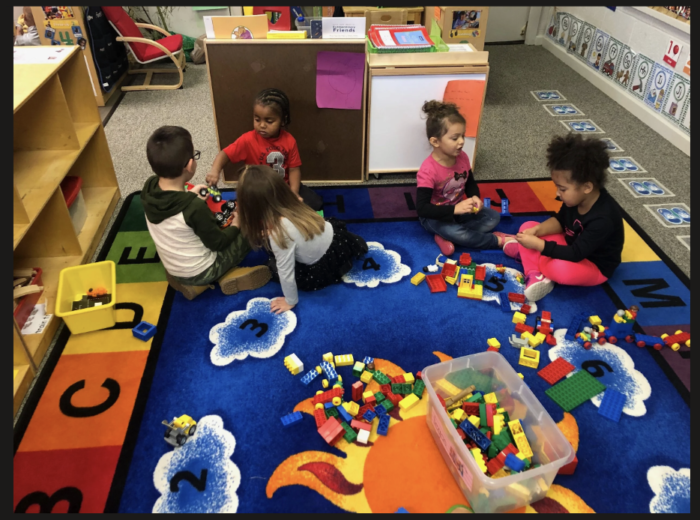
A Headstart classroom
I think of the child who needs the speech therapist. The child who needs developmental screening. The child whose parents work two jobs and depend on Head Start not simply as preschool but as a lifeline.
Then there is hunger.
The enormous reduction in SNAP (Supplemental Nutrition Assistance Program) does not arrive at a kitchen door labeled “poverty.” It arrives as a parent standing in a supermarket putting food back.
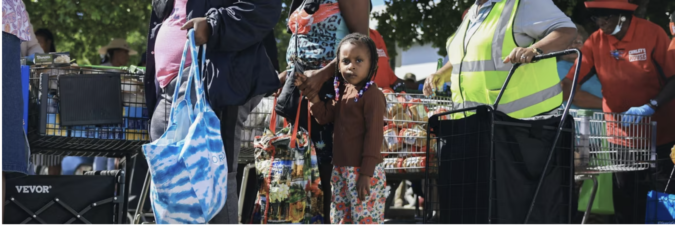
A child in a Florida food bank line
A child in the lunch room is embarrassed because everyone else has lunch and she doesn’t. Educators and nutrition advocates warn that hunger can affect children’s health, emotional well-being and ability to learn.
This is how a war on children works. Not necessarily with soldiers or guns, but with paperwork, eligibility requirements and budget spreadsheets.
A child may never know that Congress cut SNAP.
She only knows dinner is smaller.
A child may never understand Washington changed Head Start regulations.
He only knows the classroom has fewer resources.
A child may not understand immigration law.
She only knows her mother is gone.
Now we are entering another unsettling territory: childhood vaccines.
Robert F. Kennedy Jr., Secretary of Heath and Human Services, has pushed for major changes to the childhood immunization schedule, calling for fewer routinely recommended vaccinations, eventually separating the combined measles, mumps and rubella vaccine into three shots. Pediatricians and public-health experts say there is no scientific justification for these changes, warning that confusion or delays could mean more children will miss their shots.
Public schools—the places where millions of children spend their days—are being asked to do more with less. The administration proposed cutting roughly $12 billion from federal K-12 education programs, threatening after-school programs, summer programs and other supports.
If the test of a society is how it treats those with the least power, American children have almost none.
They cannot vote.
They cannot lobby Congress.
They cannot hire lawyers.
They depend upon us.
Perhaps the most disturbing part is how easily we can stop seeing them.
