Pat Taub
GUEST POST by BARBARA BENGELS
When a good friend announced she was expecting her first great-grandchild, I immediately responded with the age-old question: “Is it a boy or girl?”

Much has changed in my lifetime; the role of gender is among those. Recently a young friend went to the DMV to have their name and preferred gender indicated. We held our breath and cheered when they were successful.
I welcome the idea of people being whoever they want and need to be. I’ve been known to shock people when I contend that the idea of just two sexes has been perpetrated by religious dogma. History chronicles many societies where that wasn’t the case. And why should gender –hormonally determined–be a one-or-the-other option? Despite my heartfelt acceptance of this, I’m often at a loss for how to respond.

Traditional religion often opposes gay and lesbian unions
Years ago, I had a college student who sat at the very back of my classroom. They had an androgynous name, an androgynous appearance, and never spoke in class. It troubled me that they never participated. I didn’t even know if they were a boy or a girl–but it troubled me even more that I cared! After all it was their business. Their academic work was all that should have concerned me.
A more challenging incident occurred several years later. As my freshmen class filed into the room, I was startled by the young man who sat directly in front of me. His purple lipstick and matching nail polish set him apart –as did his beautiful smile. The other boys weren’t smiling; the room’s tension mounted. It was clearly a moment for me to set the tone of the class.
“Welcome to my section of Composition. For one semester we will all work together. This room will be our sanctuary from the rest of the world, a place where we can write our innermost thoughts and maybe even learn more about ourselves. If you’re not ready to become a part of this temporary “family,” there are plenty of other sections of English where you may feel more comfortable. Please feel free to leave now if you’ll be happier elsewhere.”
No one left. From the tone of my voice, I had made it clear I wasn’t going to put up with any meanness. Miraculously it worked. The student with the purple nails had a terrific sense of humor and an engaging personality, becoming accepted and loved by his classmates. Perhaps the students learned more from this experience than from anything else I taught that semester.
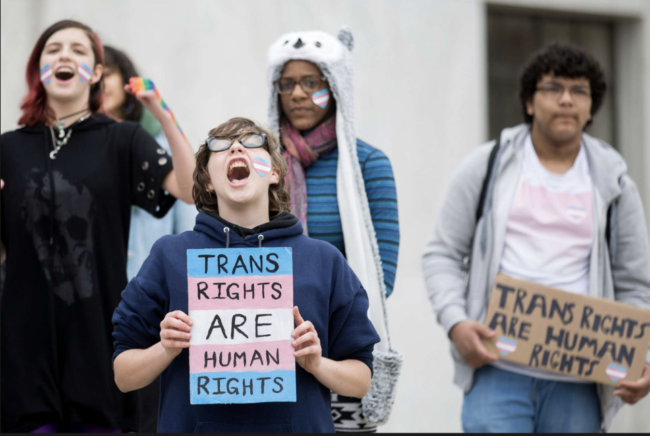
Since then, I’ve had other students who were openly gay and totally comfortable with themselves; a student who casually introduced themself as transgender. By then the other classmates didn’t bat an eye. I was proud of their acceptance but embarrassed to be from a generation with fixed ideas about gender.
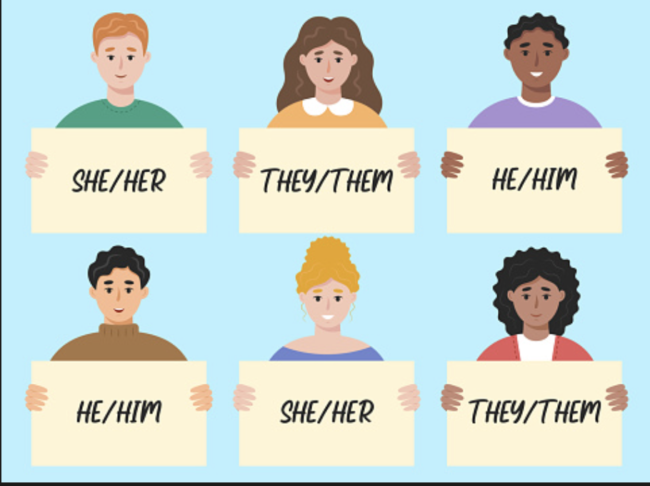
Today I have friends who are true to themselves –yet I still stumble over “they/them” pronouns. Initially I can be awkward, worrying I will inadvertently say something offensive, stupid or ignorant. Fortunately, these feelings are short-lived. After a rocky beginning, I settle in and relax.