 Pat Taub
Almost two years into Israel’s genocide in Gaza, 60,000 have died, not counting all those buried under the rubble. Among the causalities: 1,000 men, women and children gunned down while racing to grab meager boxes of food, along with the deliberate murders of 1,000 doctors and nurses and 232 journalists.
Now things have cruelly escalated. As a result of Israel’s months long blockade of food into Gaza, the entire population is facing imminent starvation, prompting a few world leaders and elected officials to break their silence and condemn Israel.
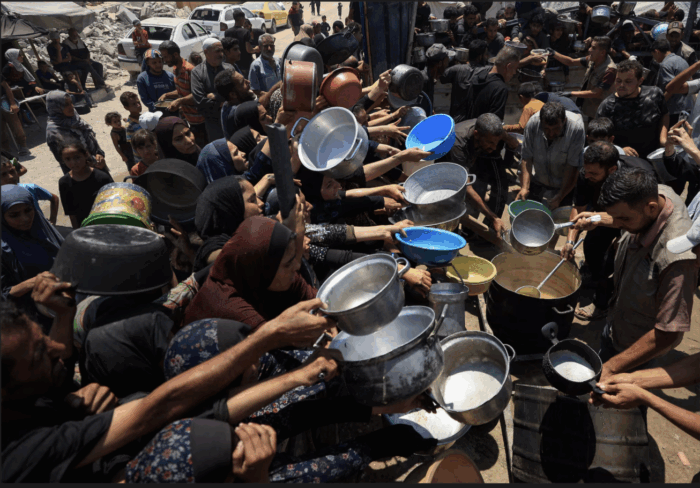
Desperate Gazans reaching for food from a charity kitchen, July 22, 2025
But their voices are too little, too late and seemingly only in response to the shocking images circulating on mass media, showing mothers holding hard-to-look-at skeletal babies on the brink of death from starvation. These images have prompted massive street protests across the globe, adding pressure to elected officials to acknowledge the suffering in Gaza, recognizing they can’t avoid public opinion forever.
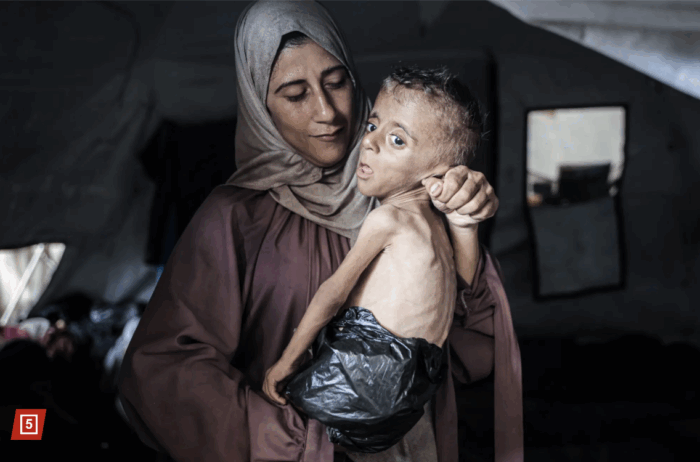
Palestinian child Muhammad Zakariya Ayyoub al-Matouq held by his mother in Gaza City on July 21, 2025.
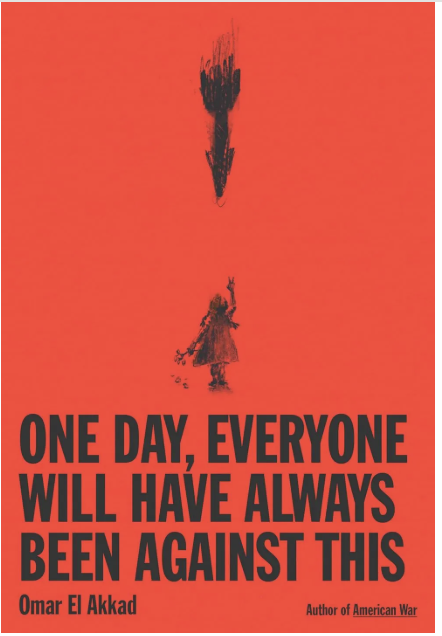
The cynical handwringing of the late-in-the-game faux sympathizers like the UK’s Prime Minister Keir Stramer and US Senator Amy Klobuchar is reminiscent of Omar El Akkad’s prophesy in his book, “One Day, Everyone Will Have Always Been Against This.”
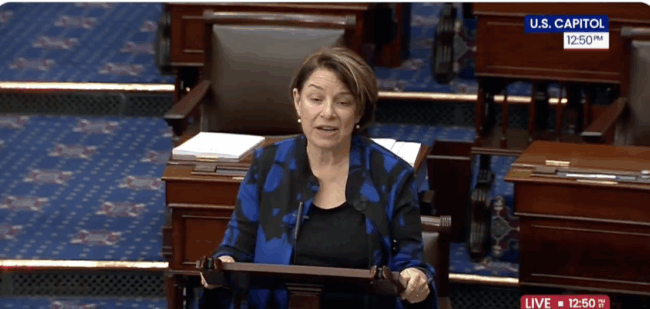
Amy Klobuchar addressing the Senate on July 22nd in a shameful about face speech calling for aid into Gaza after being one of Israel’s top supporters for decades
El Akkad predicted that when the genocide finally ends and it is behind us those who looked away “will be properly aghast that it was allowed to happen.” He warns all who have looked away are in danger of becoming soulless. This is an unsettling thought for good people who found it too uncomfortable to take in the genocide and raise their voices in protest.
We must decide what it means to be human. Do we vote for the lesser of two evils when he or she backs a genocide? Do we succumb to feelings of helplessness? Do we look away because we can’t bear to be uncomfortable?
Citizens of Nazi Germany who lived through the holocaust frequently claimed ignorance of the extent of Jewish persecution. But we don’t have this excuse. Israel’s full-scale genocide has filled social media every day for almost two years. Brave journalists, along with exhausted doctors and nurses have regularly pleaded from bombed out streets and overcrowded hospitals urging the world to stop the horrors.
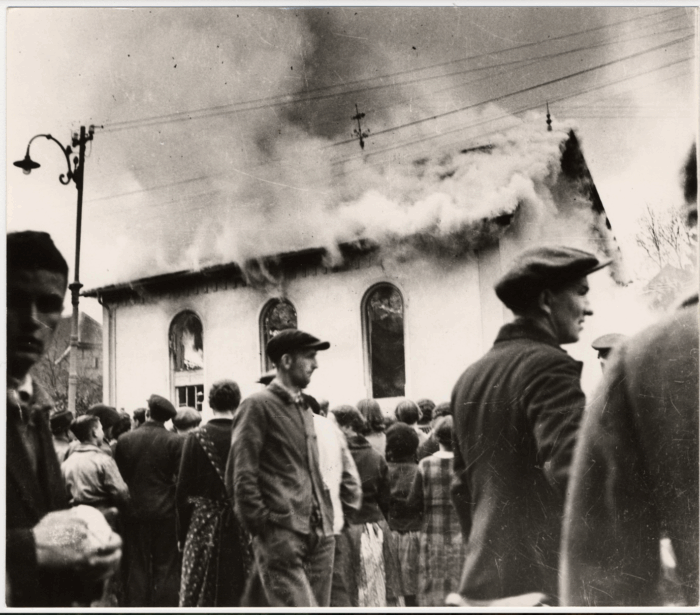
German citizens passively watching a synagogue burn, November, 1938
Citizens across the globe have responded to the outrage, taking to the streets in mass mobilizations, facing push back when their actions have been called “antisemitic.” University professors have been fired for standing up for Palestine. Students peacefully protesting for Palestine have been denied their diplomas.

Student encampment at UC Berkeley, 2024
Our world has been turned upside down when those appealing for justice and mercy are attacked while the guilty perpetrators are defended as protecting their land or acting in self-defense.
Sensitive journalists and public figures like Gabor Mate have been warning us that looking away from the genocide sets a terrible, inhumane precedent. We are looking at a world post-Gaza where citizens will become numb to future genocides and where the rule of law no longer carries any weight. Or as El Akkad warns when we look away “the muscles of indifference have been sufficiently conditioned.”
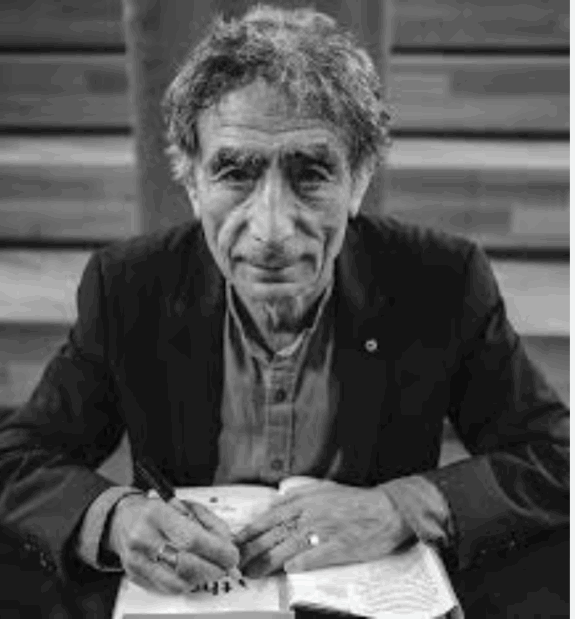
A recent image of Gabor Mate
But we don’t have to accept this outcome. We can stop looking away and wake up before it’s too late. Each of us has a voice. We can stand with others who believe in the power of collective love. Those who have been silent are called to find their voices and join the ranks of humanity.
As El Akkad told Chris Hedges when interviewed by him, “We can act as if there is hope, even if it’s not readily visible.”
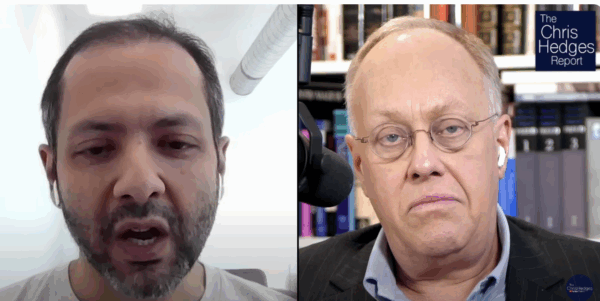
Omar El Akkad (L) being interviewed by Chris Hedges
Like El Akkad and other peace advocates, I hold onto the hope that if we work together for a caring society, we can feel hopeful. Resistance is no longer an option.
Humanity hangs by a thread. The choice is ours: do we salvage it or let it die?
