Pat Taub
I rankle whenever I hear the term, “successful aging,” which has become the Boomers’ mantra. I take issue because it implies there is a right and wrong way to age where successful aging is defined in terms of a self-centered wellness regime.
I find it even more irritating when successful aging becomes a competitive sport with a tendency to brag about one’s diet or exercise program. Or when friends compete to see who can chalk up the most hours at the gym or doing Pilates.
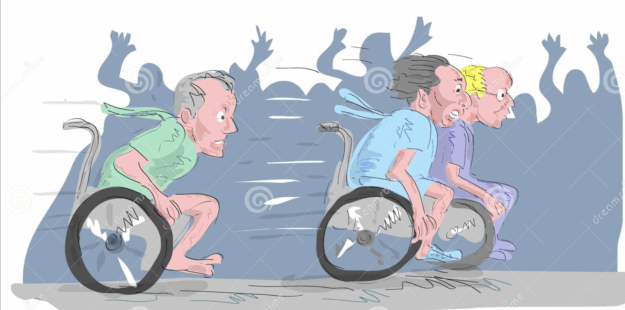
Consider too that successful aging is another benchmark that divides the privileged from the poor. It takes money to afford a gym membership, expensive organic foods, vitamins, and medical screening procedures often not covered by insurance.
I’m not alone in my annoyance with successful aging. Barbara Ehrenreich, author of Natural Causes: An Epidemic of Wellness, The Uncertainty of Dying and Killing Ourselves to Live Longer, eloquently challenges this concept.
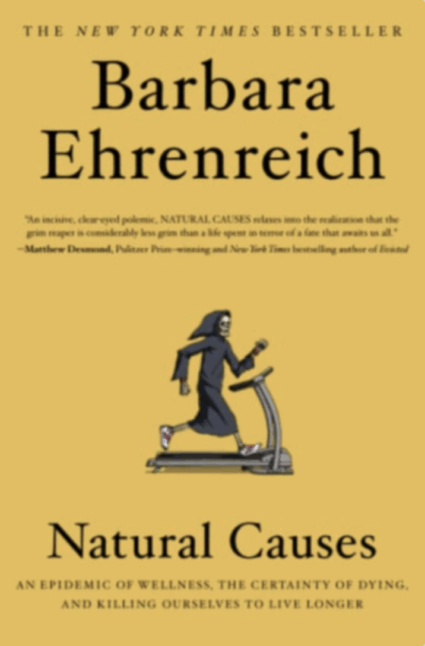
Ehrenreich maintains that many older Americans are stressed-out in their allegiance to successful aging, where old age becomes a battle to keep death at bay as long as possible. Death is viewed as a disease as opposed to a normal stage in the life cycle. For Ehrenreich, successful aging reflects an inability to accept death, what the writer Stephen Jenkinson calls our “death phobia.”
This adversarial relationship with death advances a wellness regime as the solution to longevity. To live longer older Americans are ingesting mega vitamins, eating bland “healthy” food, exercising like mad and succumbing to unnecessary tests pushed by our for-profit medical profession.
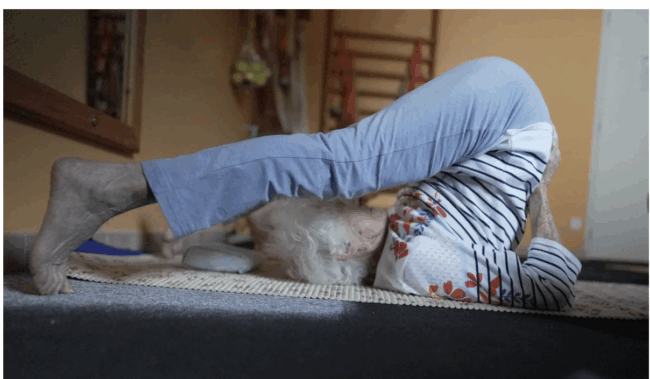
Successful aging promotes images of outliers like this remarkable 102 yoga teacher (The New York Times)
Ehrenreich opted to spend her ‘70’s and ‘80’s at her desk writing or taking a long walk as opposed to countless hours in a windowless doctor’s waiting room. She led a healthy life, worked out regularly, ate healthy foods, but never to the point of depriving herself of favorite foods like butter, commenting, “What’s the point of bread without butter?”
With a Ph. D in cellular immunology Ehrenreich takes aim at the popular concept that positive thinking can defeat bad cells and that the right mindset can defeat our biology. She makes the case that cells, and subatomic particles don’t have personalities; they go their own way regardless of how we react.
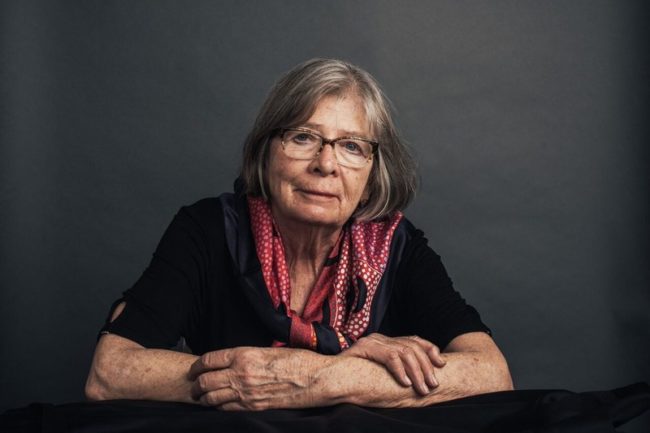
Barbara Ehrenreich
I was reminded of a friend who, after being diagnosed with breast cancer attended a support group where she was encouraged to imagine friendly warrior cells attacking her cancer cells. When this didn’t prove effective, she confessed to feeling like a failure.
In an interview with Slate Ehrenreich suggested that the obsession with successful aging carries a strong level of narcissism. She told the interviewer: “It’s all about controlling what’s within the perimeter of your skin. It’s not about actually doing anything in the world or with other people.”
Elaborating on Ehrenreich’s thesis, my life feels fuller when I make time to deepen my connections to family and friends and join causes for social justice and world peace. Jane Goodall personified this aspect of aging in her tireless advocacy for caring for the planet and the animal kingdom.
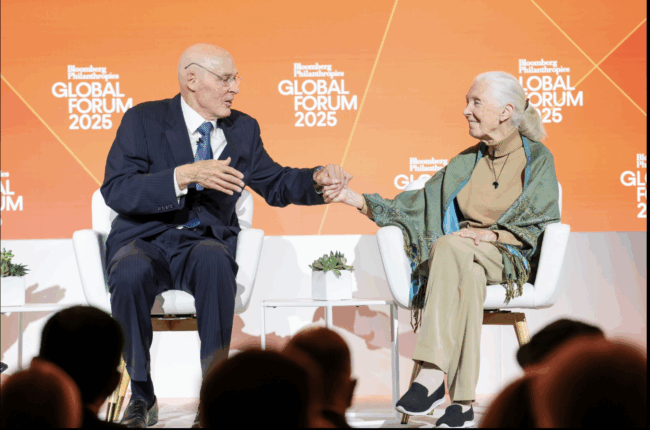
One of Jane Goodall’s last public appearances, advocating for a safe, liveable climate
Pondering the campaign to outwit death Ehrenreich writes:
You can think of death bitterly and with resignation . . . and take every possible measure to postpone it. Or, more realistically, you can think of life as an interruption of an eternity of personal nonexistence and see it as an opportunity to observe and interact with the living, ever surprising world around us.