 Pat Taub
GUEST POST by JANET WEIL
After pouring out my heart to a dear friend about my anguish over the Gaza Genocide, I asked her, “What are you thinking and feeling about all this?”
“I feel exhausted,” was her honest, sad reply.
“I get it,” I told her.

Activism fatigue can result in feelings of depression
We all only have so much capacity for family, friends, community, and political activism. Many older women including myself feel protective of our time, reduced energy levels, and psychological health. Viewing the raw footage of genocide and war, let alone organizing against the U.S.’s arming Israel’s war crimes, IS depleting and often feels hopeless.
Just over a week since that conversation, the Israeli-initiated war against Iran has been made more terrifying with Trump’s unconstitutional, unilateral decision to bomb 3 Iranian nuclear sites.
CODEPINK Confronter-in-Chief Medea Benjamin summed up the situation: “This reckless, illegal escalation pulls the United States deeper into a war the American people do not want and never authorized.”

Medea Benjamin, (center) protesting in Congress for peace and no war with Iran
Meanwhile, the Gaza Genocide continues. Over 5,000 infants under age 5 in Gaza were treated for malnutrition in May; their enormous eyes stare blankly out of withered little faces. Older children and adults are also starving, or being shot as a grotesque, militarized entity called “Gaza Humanitarian Fund” lures Palestinians into danger with promises of bags of flour.

Palestinians carry a man who was shot while in line for a bag of flour in Rafah
In this time of horror, two questions occur to me:
1. After decades of being an anti-war/pro-peace advocate, what have I learned?
2. What gives me hope, or at least the strength to keep going?
My answer to the first question is that I have become tougher, less naïve, and more interested in educating about root causes of war and working on practical strategies.
I wrote to an acquaintance recently: “Obviously (by now), opposing US militarism and war-making one war at a time doesn’t stop the dynamic.
This system of violent domination is driven by corporate profit-seeking and corporate control of an increasingly powerless Congress. Until we reform our economy and electoral system, there’s always going to be another war. Also, using language and tactics that speak to a wider group of Americans is crucial to building a movement to oppose foreign wars and military bases.”

For the answer to the second question, I look to my age peers, the older women activists who continue to serve humanity by opposing the evils done by our own government.
Retired diplomat and Army Colonel Ann Wright, whom I had the honor to be arrested with on the Golden Gate Bridge in a CODEPINK action during the Iraq War, particularly inspires me. Contemplating her brave, adventurous life gives me energy. You can read about Ann Wright here on Wikipedia and here in her own words.

Ann Wright protesting the war in Iraq
Here’s a recent action illustrating Ann’s bold spirit.
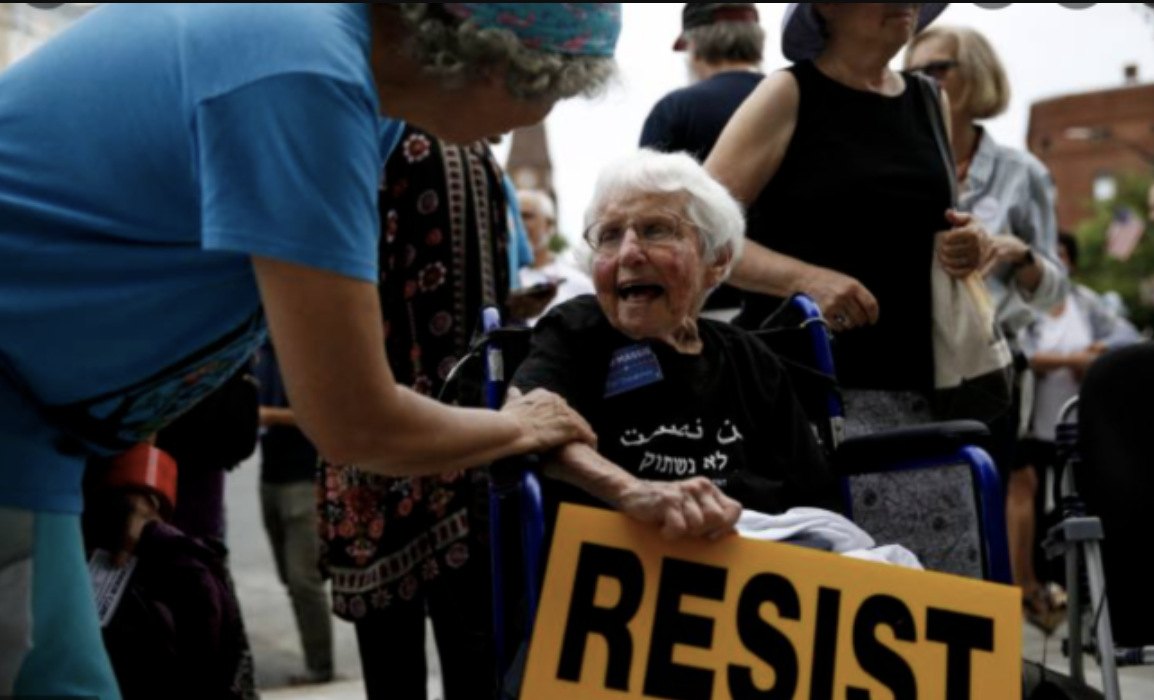
Older – sometimes quite old! – women are among the most dedicated advocates for peace in our militarized society. Some speak out from a feeling of love of country and devotion to the US Constitution. Others are focused on a more universal yearning for world peace. Many march with their daughters or organize their local communities in small vigils.

A Mother and Daughter marching in the No King’s March, Portland, Oregon
Whether military veterans turned peace advocates, or mothers of sons killed in previous wars, or Peace Economy promoter and CODEPINK co-founder Jodie Evans, or just “ordinary” women who want peace and justice for all people, these women’s examples spur me on.

At the No Kings march, I brought a sign not about what I despise, but what I believe in:
Peace. Climate Justice. Human Rights.
I had something to give — free bumper stickers. A woman who asked for one carried it as her “sign.”

The author at a No King’s March, Portland, Oregon
And my “exhausted” friend? A few days after the No Kings action, she showed up for a small but powerful No War on Iran rally after I emailed her the details. Like me, she listened intently to every speaker. Seeing her there encouraged me.
I’ll give the last word to a young woman:
Greta Thunberg said in 2019, “… there is hope. I have seen it. But it does not come from governments or corporations. It comes from the people.”


