 Pat Taub
Fashion commentator Emily Chou observes “Every time you dress, you’re making choices and even an “I-don’t-care” message is a clear statement.”
We all want to be thought of in terms of our ideas and talents, but because we live in a visual culture, it’s almost impossible to avoid having others form a first impression based on what we’re wearing. This doesn’t mean we should feel pressure to dress in a conforming way. Rather it’s important to be aware of the power of clothes speak. Whether you’re wearing casual slacks and a top or choosing to be highly original, a message is conveyed.

Celebrated fashion eccentric, Iris Apfel at 100
Throughout recent history Feminists used their wardrobes to their political advantage. Early Suffragettes in England sewed pockets in their coats to conceal their radical pamphlets.

American Suffragettes were identified by their white outfits, chosen to make them stand out against the prevailing fashion of dark clothing. During the hey-day of second wave feminism women liberated themselves from uncomfortable bras, stockings with garter belts and other restrictive clothing.

Like many young teens I frequently dressed in a rebellious way. I remember going through an all-black phase, mimicking the Bohemian culture of Greenwich Village. My proper mother reprimanded me, “What you wear is a reflection on your family,” while my father joked, “I see you’re off to another funeral.”
Today, as an older woman my clothes are fairly conservative, opting for comfort. But I can’t pretend to not being influenced by fashion. I still agonize over what to wear when going out to dinner or to a party.

Artist Faith Ringgold favored African inspired clothes to honor her heritage
Many women speak through attire that advertises their politics, like T-shirts that read, “Free Palestine,” or with printed slogans for abortion rights or a favorite candidate. Those who support Gaza frequently don a keffiyah. We’re all familiar with the red MAGA hats.
Indigenous women proudly wear their native dress to advertise their nationality. Members of the women-founded peace group, Codepink, can be identified through their bright pink attire. Groups addressing our climate emergency frequently wear green.

A Codepink action in support of Gaza
Curious as to how other older women relate to their clothes, I polled women on the WOW Facebook page asking them:
“What is your relationship to clothes? Has it changed as you’ve gotten older?”
Here are some of their responses:
PENELOPE:
My relationship with clothes has changed with age- I no longer need professional clothes- suit jackets and skirts. My figure has changed-I am 2 inches shorter and weigh more-so I wear long tunics and leggings. My budget is smaller, so I shop mostly consignment.
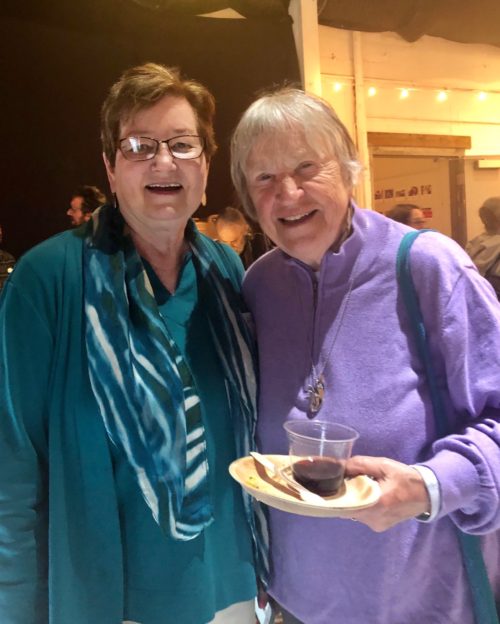
Two older women choosing comfortable attire similar to responders of my poll
CATHERINE:
I am always concerned about what I wear. Even if I walk down my own driveway in the middle of the woods to pick up my mail. . . I immediately notice what other people are wearing.
ANN:
Always loved fashion … even before I walked upon the wicked stage…lol… although I rarely wear dresses… and comfort is just as important as color and design.
LOREN:
I’ve never really cared about fashion because as I was growing– I’m 6’1″ none of the cute things ever came in my size. I prefer my Birthday Suit to anything but if I have to wear clothes, breathable clothing is my go-to.
TONI:
I have rejected style since the 60’s and continue with jeans and turtlenecks. I was in a group who decided with my neck protection that I was either one of Jack the Ripper’s victims in a previous life, or maybe Jack himself.
Covid’s enforced isolation with the ban on shopping forced me to recognize I have more clothes than I need, and how I had become captive to fashion. I vowed to cut back on clothes buying. However, once the ban was lifted, I fell under the spell of fashion advertising and resumed my shopping habits. My mother’s voice came back to haunt me, “Do you really need that?”
