 Pat Taub
Practically everyone I know is feeling overwhelmed by Herr Donald’s rapid-fire attacks on all we hold dear, which includes police state tactics in arresting migrants, gutting federal funds for housing, daycare, medical benefits, and public schools, while supplying bombs nonstop to perpetuate the live-streamed genocide in Gaza.
In general most have responded in one of two ways: looking away or engaging in some form of social protest. The avoiders tend to be those who feel helpless to make a difference. They find solace in a news blackout and soothing distractions like social media, Netflix, shopping, and that extra glass of wine.

Online social media is a common distraction for those overwhelmed by society’s turbulence
Members of the social protest group participate in No Kings actions, oppose the Gaza genocide, defend migrant rights against ICE, and advocate for restoring education and health care funding.

Arizona teachers on strike marching to the capital
I feel overwhelmed a lot too. I am sickened by images from Gaza of skeletal men, women, children and medical staff facing imminent deaths from starvation; of ICE brutally arresting migrants; and the prospect of low-income families having their housing and food benefits disappear.

A malnourished six month-old baby in Gaza facing death by starvation
I can sympathize with feeling the need to tune out, but frequently this response has a short shelf life. A socially induced depression can resurface, tempting avoiders to up their coping mechanisms through anti-depressants or unhealthy behavior like over-eating or too much alcohol.
If you’re an avoider, please consider those research findings that report when we give up, we feel worse. When we engage in a social justice cause, no matter how small, we feel better. We feel productive and connected to what’s good in the world.
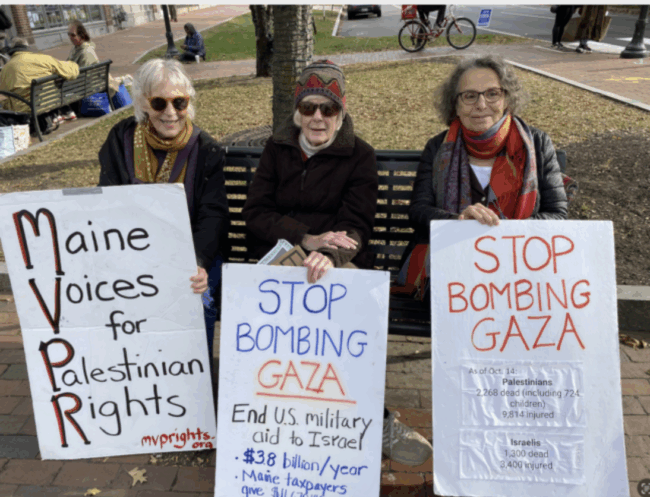
Protest in whatever way you can, like these elderly women, who sit with their signs because they can’t stand for long.
This can be a difficult message to sell. When I tried to convince avoider friends that involvement can be the antidote to despair, I met with resistance. One insisted, “I have compassion fatigue.” Another warily commented, “I feel sucker-punched by the news on a daily basis.”
If you’re among those feeling defeated, try this: step back, take a deep breath and focus on strengthening your empowerment repertoire.
For suggestions on self-empowerment, I solicited ideas from the WOW Facebook page where I asked members what they do to feel empowered.
“When I’m beginning to feel insecure, I just say to myself, ‘I’ve got the Power! No excuses needed, no explanation needed.’ It works for me.”
Patricia, Syracuse, NY
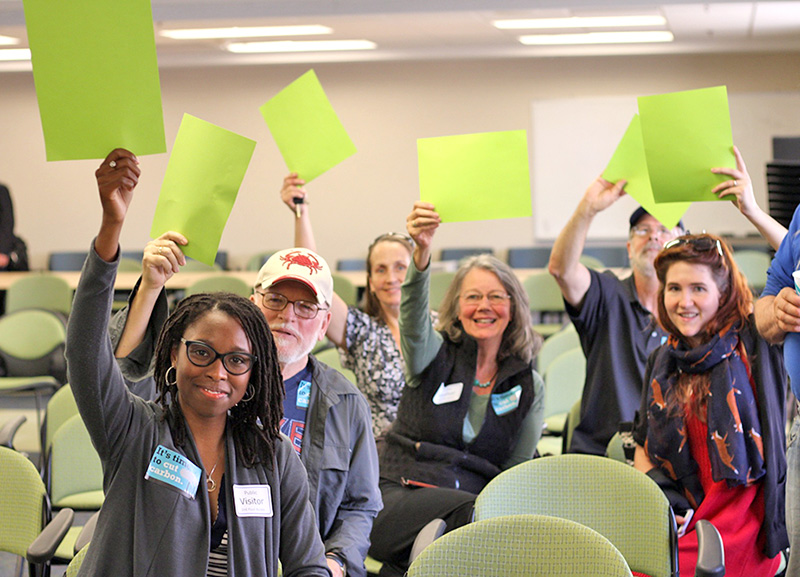
A citizen’s group, empowered by formulating an action plan
“For me, empowerment is taking a negative situation or experience and turning it into a positive through attitude and action.”
Christine, Rhode Island
“Try to do one thing every week that promotes social justice: write a letter to the editor of your local paper, join a local protest, donate what you can to organizations supporting migrant families,”
Alice, Maine
“Practice using my voice instead of being wary about saying how I really feel.”
Walker, Virginia
I once asked Medea Benjamin, a co-founder of Codepink, the anti-war organization, how she stayed positive in the light of so much national and global upheaval. She commented, ‘Through my peace work I meet people from all over the world working for justice. They offer reservoirs of hope.’
Staying hopeful when life is difficult keeps despair at bay. The late Joanna Macy promoted “active hope,” where hope is linked to intention. We identify a direction for our hope and then take steps to move in that direction.

Joanna Macy who left us on July 19th at age 96
Practice active hope with your friends when despair fills the air. Ask everyone to identify what makes them feel hopeful. When we look away, we can be blind to the positive actions all around us.
An activist friend reminded me that the corporate media fails to report on all those protesting who are making a difference, offering beacons of hope.
Here’s what gives me hope: Democratic Socialist Mamdani who beat the odds to win Manhattan’s mayoral primary; Bisan, the fearless young reporter from Gaza; supporters of Gaza who continue to take to the streets as the genocide approaches its end stage; Vets for Peace, for their decades long anti-war actions; neighbors turning out to stand against ICE.

Bisan Owda, the fearless 27 y.o. reporter from Gaza, who regularly posts her videos, pleading with the world not to ignore Gaza.
As Margaret Mead famously said,
“Never doubt that a small group of thoughtful, committed, citizens can change the world. Indeed, it is the only thing that ever has.”
