 Pat Taub
GUEST POST by MICHAEL STEINMAN
I’ve collected Things all my life. Children look enviously at the Things adults have and copy. An early reader, I not only tunneled through books but wanted to HAVE them (thus a career in academia, where a full bookcase was a credential). I bought jazz records, CDs, and memorabilia. Aloha shirts, folk art, kitchen implements, and far too much more.
This isn’t How to Downsize — Marie Kondo irritates me — but it might be Adventures in Divesting.
It began last year (for a reason I explain at the end) with things that had outlived their allure or purpose. The piano I’d stopped trying to play. Unfinished books. Annoying CDs. Things that disappointed: the noisy paper shredder, the electric toothbrush that savaged my gums. Things that sparked shame: too-tight clothing.
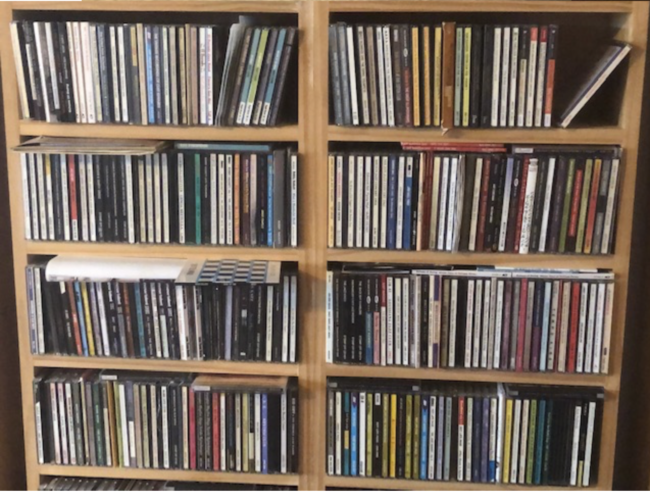
Part of the author’s extensive CD collection
Things with Associations: the Mexican and Indonesian folk art bought with a former romantic partner. The goofy animal mugs a friend gave me; the faux-artwork I disliked but felt guilty about tossing. Or too lazy. Things I kept because I remembered their price tags.
But I had the leisure to address my domestic landscape thoughtfully, so that I didn’t suffer Tosser’s Remorse. Serious questions surfaced. Had I bought this Object for its own appeal, or was I bored, lonely, or restless when I did? Had my tastes changed? Do I use it? Do I like it? Do I need it? (How many Sharpies does anyone need?) Do I want to move a mountain of Stuff into storage or to a new place? Do I want to make the executor of my estate hate me? (This is not hyperbole.)
Holding a record or book, I imagine how I will feel giving it away: relief or sadness? If sadness, I keep it.
Certain things will stay to the end: my Louis Armstrong autograph; photographs, music, and books that continue to move me.
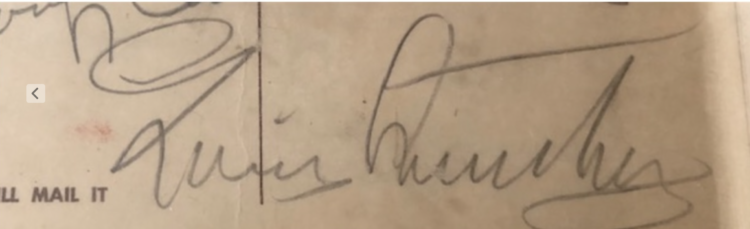
The author’s treasured Louis Armstrong autograph, with which he will never part.
And some things can be compressed: CDs lose their jewel boxes and go into flexible plastic sleeves. One of each, not a quantity. Rationing is not imminent: pandemic-shopping can quiet down.
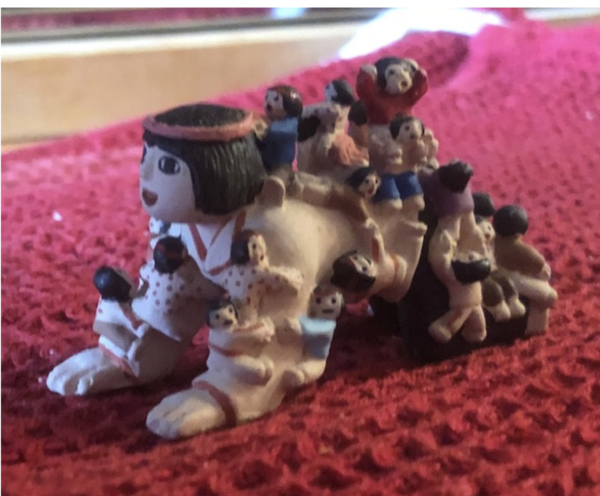
A treasured object the author couldn’t bear to part with.
Happily, I live near an ethical non-profit charity shop, so I regularly fill the car, imagining that some shopper will gasp, “Look! Someone’s weird grandpa died! Look at those red jeans and aloha shirts!” a scenario that delights me. My neighbor now plays my piano instead of a keyboard. Friends gratefully give new homes to rare records and books. Let someone else find joy in the objects I’ve loved for decades.
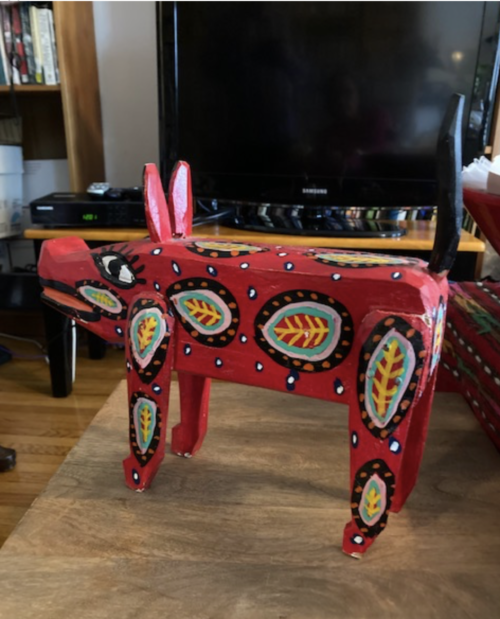
Rosa from Guatemala will have a new home
Divesting is an acknowledgment of mortality, but it is also tossing the ballast out of the hot-air balloon.
One piece of advice I could not resist: I hope that when you divest, have a good reason and time to do so, not financial, medical, or structural crisis. I have the best reason: I am getting married to a splendid woman this Sunday. My wife (more minimalist than collector) and I will eventually move in together.
Even though she has said, “Your music is important to you, your books are valuable,” I don’t want her ever to think that she married a collection of Things rather than a Person Who Loves Her. Her happiness is worth more to me than any cabinet full of animal-head coffee mugs.

Michael Steinman is a writer and retired English professor, who thinks his real work is his jazz blog (JAZZ LIVES), where, through videos of live performances worldwide, he “sends out love in a swinging 4/4.”
