 Pat Taub
“What I regret most in my life are failures of kindness.”
—George Saunders, acclaimed novelist, in his 2013 Syracuse University commencement address.
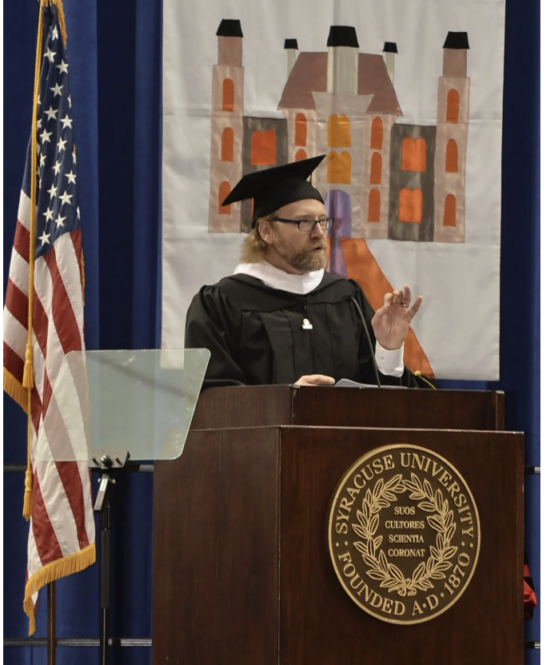
George Saunders delivering his celebrated commencement address on kindness
In a New York Times interview, referring to his commencement address, Saunders confessed that, looking back on his life, he wished he had been kinder. His Buddhist teachings frame kindness as a practice of self-awareness–more involved than just being nice, and far from easy since we have a tendency to prioritize our individual needs over the needs of others. Practicing kindness challenges us to be less selfish, more open and loving. It gives life meaning.
Cruelty, not kindness, is driving our federal government as it deploys ruthless ICE thugs into cities across the country, unlawfully deporting migrants and children. Cities in ICE’s crosshairs are living in fear.
Minneapolis has experienced the largest ICE invasion, where over 3,000 agents blanket the city, terrorizing neighborhoods, unlawfully using tear gas and physical force, escalating in the cold blood killings of Renee Good and Alex Pretti.
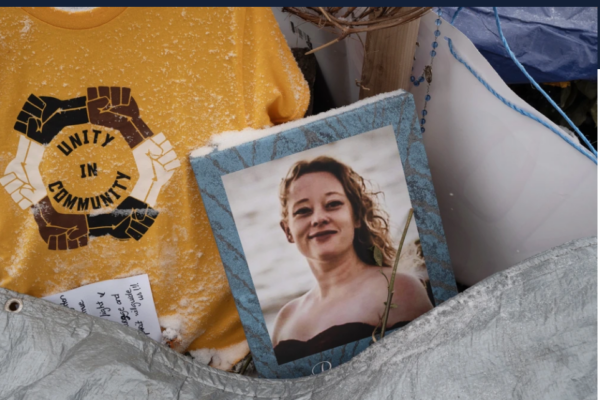
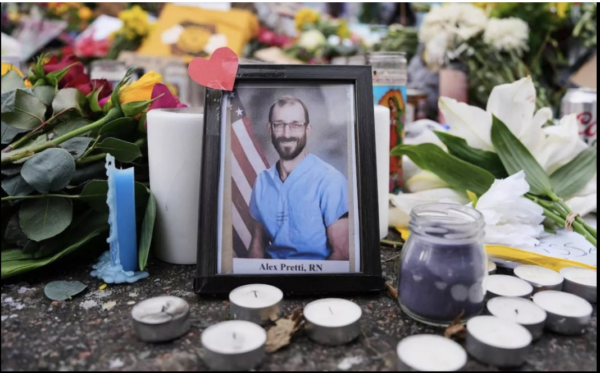
Shrines for Renee Good and Alex Pretti on the streets where they were murdered
Minneapolis has responded to these horrors with a chain of kindness with neighbors banding together, forming citizen patrols to alert ICE’s presence. Overnight food banks were formed, packing and depositing food drop-offs to families too afraid to leave their homes. Grade school children from at-risk families are being escorted to and from school.
Kindness is being practiced by all strata in Minneapolis. Clergy have led payer sit-ins and church services, leading their congregations in protest songs.
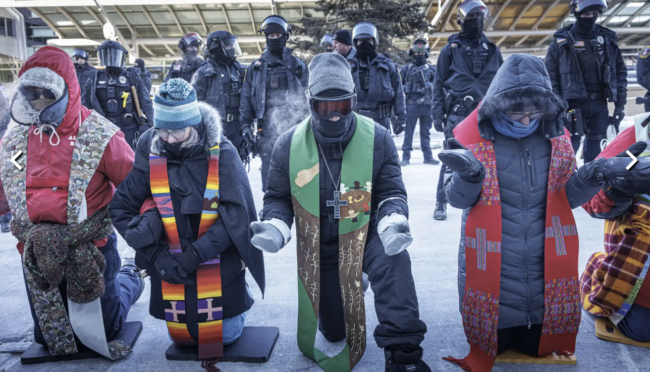
Clergy in prayer at Minneapolis-St. Paul airport protesting airlines transporting migrants taken by ICE
Kindness connects us to one another.
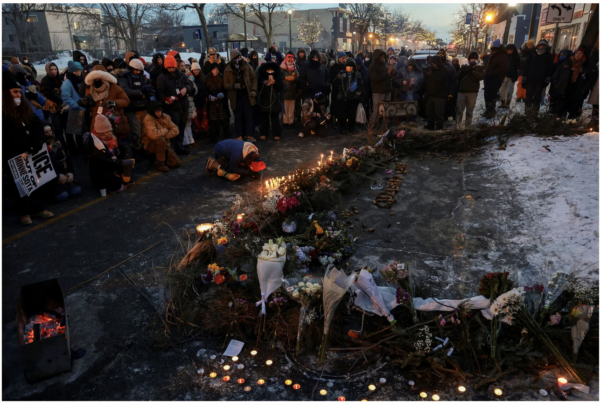
Neighbors solemnly honor a memorial for Alex Pretti
Saunders believes that those who make a lasting impression are those who were the kindest—a teacher who recognized your talents when you were filled with self-doubt; a grandmother who was a refuge when you were sad; a friend who stayed by you during a crisis.
If kindness is the foundation of a stable, caring community, how does one become kinder?
One way is to follow the Buddhist practice of being in the moment, where ego is less paramount, allowing you to respond with an open heart. The Dali Lama makes kindness central, preaching “Practice kindness whenever possible,” adding,” It is always possible.”
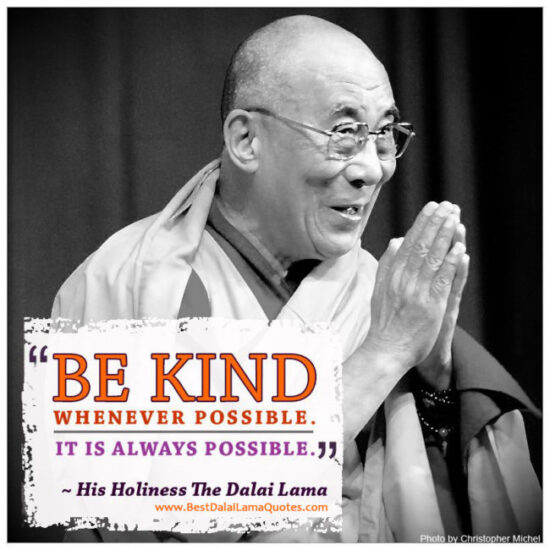
Let kindness be our response to Trump’s authoritarian policies. We need all hands-on board to outnumber the dark forces in charge. Search your conscience for ways to become kinder, shedding self-centered habits that inhibit community involvement.
I was moved by the testimony of Minneapolis minister, Rev. Rob Schneck who confessed to years of being an advocate for the religious right. Today he regrets his alliance with conservative Christians, telling a reporter, covering the street protests: “Being here, in solidarity, is part of the repair work in my own soul.”

Rev. Rob Schneck joining with peaceful protesters opposing ICE
We can’t let our righteous indignation turn into mean-spirited attacks on ICE. Be furious, but, in the model of Martin Luther King, practice peaceful resistance, or embrace the examples of legendary peace activists, Dorothy Day and the Berrigan brothers.
Don’t give Stephen Miller and Trump the satisfaction of seeing peaceful resistance turn into violence. They would like nothing better than an excuse to enact the Insurrection Act.
As an elder I identify with George Saunders’ observation: “As we get older, we come to see how selfish it is to be selfish. . . We learn we are not separate.” You don’t have to be an old couth to embrace this thinking.
Let’s continue to build people power defined by kindness. A kind heart is a heart that gives life its greatest meaning.
Let’s imagine ourselves walking the path of peace, drawing inspiration from the Buddhists, whose “Walk for Peace” has drawn appreciative crowds in their journey from Texas to Washington, DC.
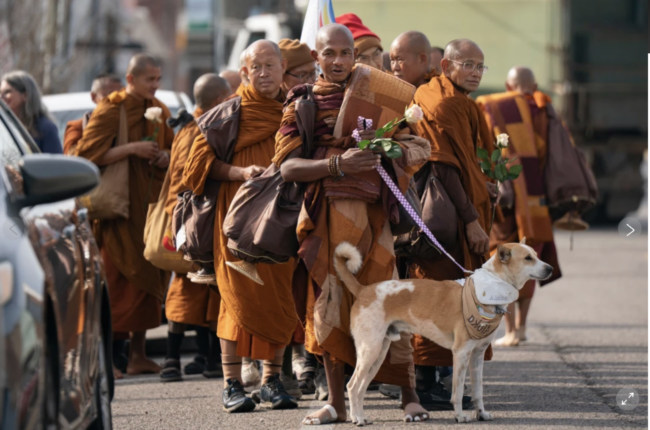
Among the Walking for Peace Buddhists with their beloved dog, Aloka
