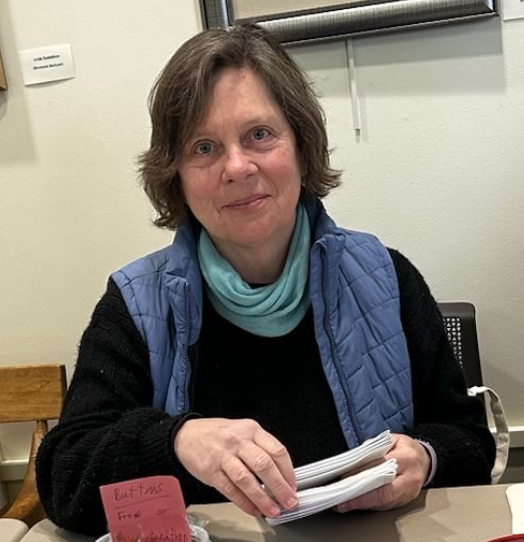
Pat Taub
GUEST POST by ABBY FULLER
Never underestimate the power of spending three days with 4,500 principled, smart, and tireless people trying to stop a genocide. I was privileged to be among this steadfast group when I attended the Second People’s Conference for Palestine in Detroit last month.
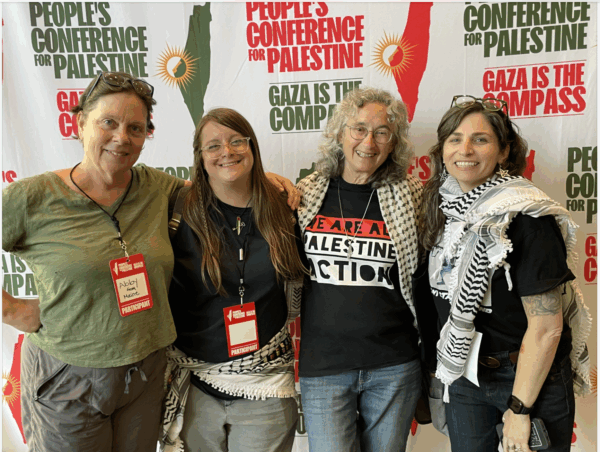
The author on the left flanked by co-delegates
The theme of the conference was “Gaza is our compass.”
There is no more urgent task right now for Americans than to stop our government from participating in the genocide of the Palestinian people. Gaza is the moral litmus test of our time: either you believe that the indiscriminate killing of children is wrong, that blocking food from reaching a starving population is unconscionable, that people have the right to self-determination on their own land and to defend that right by any means necessary–or you don’t.

Famine in Gaza is producing a spike in children’s deaths from starvation
The people of Gaza continue, nearly two years on, to exemplify sumud (steadfastness) as they pull their neighbors from the rubble and take orphaned children into their families. They are not giving up, so neither can we.
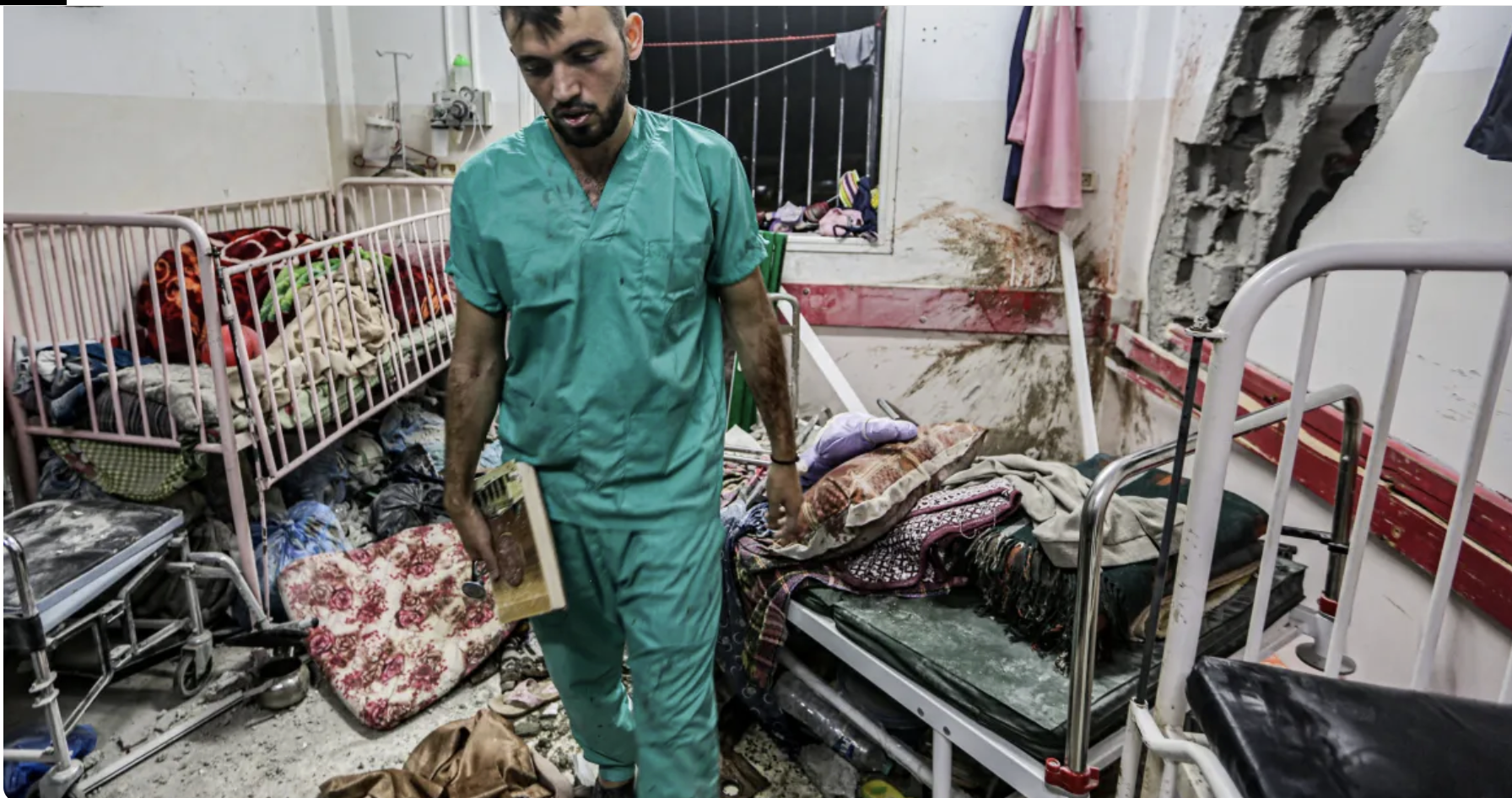
A medic trying to clean up Nassar Medical Complex after an Israeli bombing
Gaza is our compass because if Israel succeeds in decimating the Palestinian people, it will signal the final death of the rule of international law and the triumph of might makes right. Someone else will be next, targeted with technology and weapons that are being tested in Gaza.
Gaza is our compass because understanding its history reveals the brutality of 500 years of western imperialism and 500 years of resistance by indigenous peoples, most of whom are Black and Brown.
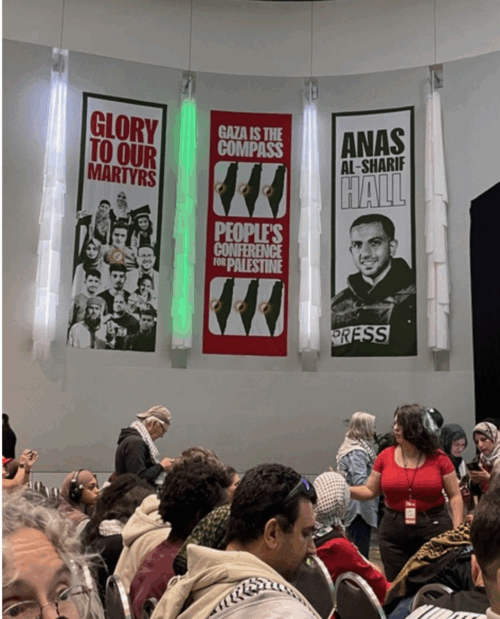
I spent three days in a packed conference hall listening to one inspiring speaker after another, interspersed with raucous cheering and chanting.
Chris Smalls, who started the first union at Amazon and sailed on the Handala to break the siege of Gaza, told of Israeli soldiers isolating him, beating him, and calling him racial slurs.
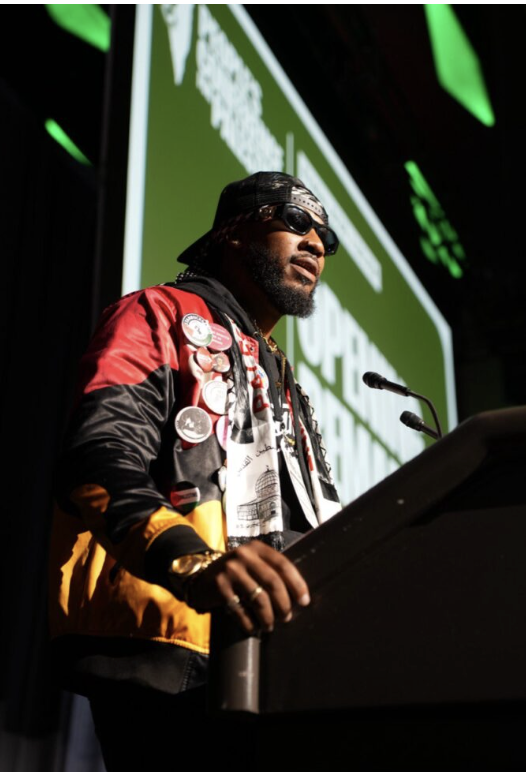
Chris Smalls
Hatem Bazian, a longtime educator and cofounder of American Muslims for Palestine, thundered from the podium that we must bring the universities back to their true role: to promote liberation.
Aisah Nizar of the Palestinian Youth Movement, which has been at the forefront of campaigns to deprive Israel of material support for the genocide, pointed out that the supply chain that brings weapons from the U.S. to Israel can be disrupted at any of its points.
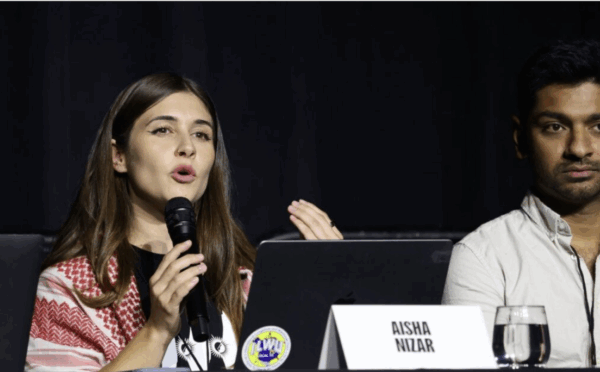
The fearless Mariam Barghouti, an American-born journalist and policy analyst who lives in the West Bank, asked:
To what lengths are you willing to go to liberate Palestine? Are you willing to risk your job? Your comfortable life in the West? Start imagining liberation: how will we register and distribute lands when Palestine is free? What social system do we want?
In the tabling area, several hundred cultural and political organizations distributed literature and sold t-shirts and goods made in Palestine. There were organizations for artists, healthcare workers, Jewish people, students, and women. In the evenings, we were treated to performances of traditional Palestinian music and debke (dancing).
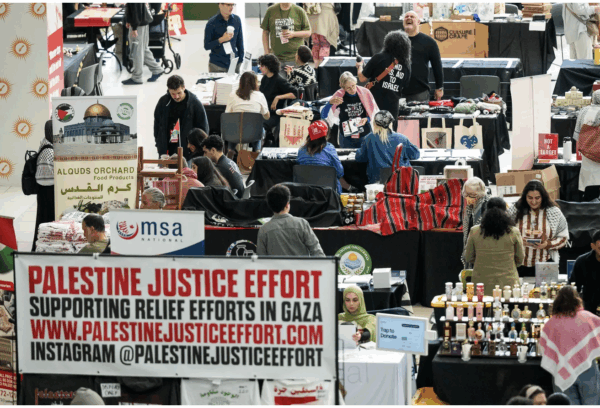
One thing was notably absent from the conference: despair— a feeling that has plagued many of us supporting Gaza over this almost two-year genocide. The mood of the conference was joy at being together and knowing how powerful we are collectively. Every conference speaker—and most of them were Palestinian, who would be forgiven for despairing—were adamant that we will win.
As Rep. Rashida Tlaib said on the last day:
They thought they could kill us, rape us, imprison us, violently uproot us from our olive tree farms, starve our children to death and we would disappear. Well guess what: now we’re in Congress and in every corner of the United States. I want to say to all of them, every genocide enabler: Look at this room motherf*ker.
We ain’t going anywhere!… We know which companies are helping and we are boycotting them. We know which countries are allowing the shipment of weapons and we are showing up and demanding they halt. The tide is turning in a way that can never be turned back. Palestine will be free!
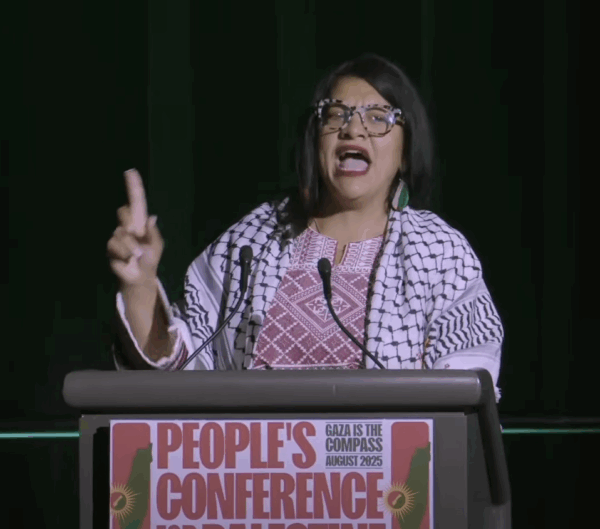
Rep. Rashida Tlaib firing up the crowd at the People’s Conference
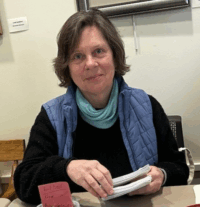 Abby Fuller organizes with Maine Voices for Palestinian Rights and the Maine Coalition for Palestine. She teaches sociology at the University of Southern Maine. She can be contacted at fullerwollman@gmail.com.